Henro Day 2: Reflections

6 02 2012

First posted on iHenro!

Kirihataji (No. 10)

Day two was so much better than day one. And that was mainly because I had a lot more interaction with people. I seemed to keep running into the same people over and over. If someone was at a temple as I was arriving, I would generally see them at the next temple too, the same with people who were arriving as I was leaving. So we would all say ‘hello’ and give a few words of encouragement. Even the bus henro, because sometimes it would take the same amount of time to walk between the two temples as it would take to drive.

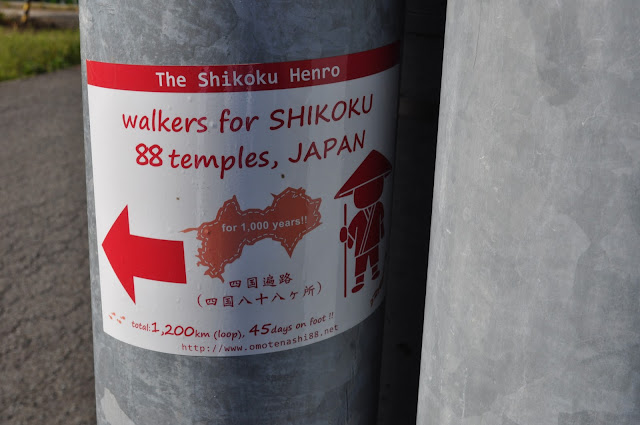
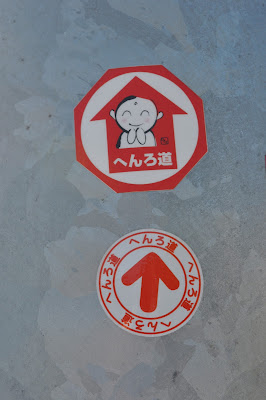
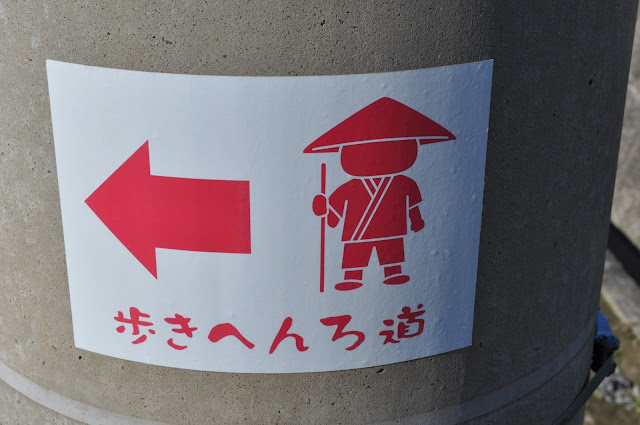
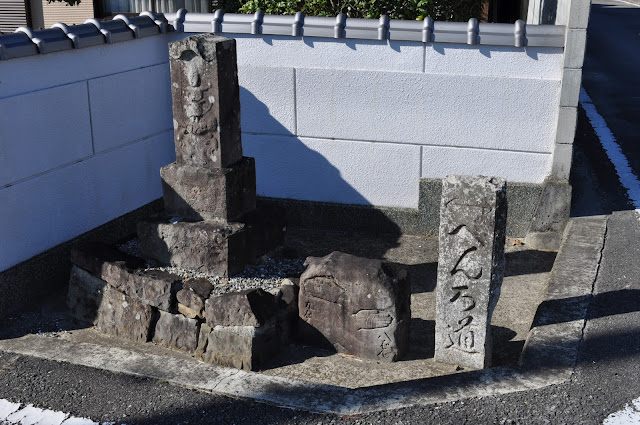
This was also the first day that I realised my guide-book (Shikoku Japan 88 Route Guide, 1600 yen on Amazon.co.jp), despite being an excellent book, was occasionally lacking in accuracy. The road maps in some areas don’t show all the details, so it can get a little confusing (like trying to find your hotel). However, in terms of the route, there are stickers and path markers everywhere marking the path, so I never got lost. (And some really cute stickers! I wish I could have bought some for myself)

Before starting out I practically had no plans as to how many days I would do, and where I would stay, etc. I wasn’t even sure how far I could walk in one day. Everything I had read recommended doing between 20 and 30 km a day, but I didn’t know if I was physically fit enough. After day 2 I pretty much decided that 25 km was probably the max I could handle, but that was mainly because doing the trip in November only gave you limited daylight hours to walk. The sun would just be rising as I left, and would set about 430, so it was getting dark around 4.

Jurakuji (No. 7) and Shukubo (on right)

Choosing where to stay was the next factor that I had to plan for. I went to the Information Centre in Tokushima and asked for some recommendations on accommodations, and the girl there said that staying in Shukubo (Temple lodgings) would probably get me through Tokushima alright. I didn’t actually, but at temple 7 I saw my first Shukubo. Next time I will probably give it a try. Ringing up the night before and booking accommodation worked fine for me, but I don’t think it would be such a good idea during peak seasons.

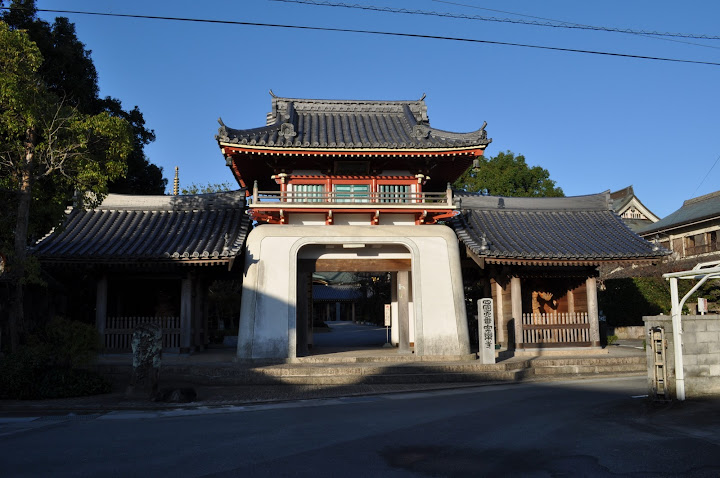
Kumadaiji (No. 8)

Also saw a few interesting and random things on day two. Temple 8 was my first ‘what the?’ moment. The gate for the temple was about 500m away from the actual temple, which was a bit unusual. It was sort of sitting alone in the middle of nowhere. Also saw a house like that, just surrounded by rice fields. I guess they have space for that in Tokushima.

The last leg of the journey was really interesting, and the longest of the day. Basically you had to cross from one side of the plain to the other, so you could actually see the prior temple from close to temple 11. The plain is intersected by the Yoshino river, which is the widest river in Shikoku I believe. It wasn’t all flowing water, and even had rice fields in the middle of it, but it took something like an hour to cross! On the other side was where I met my volunteer guide, and he walked with me for about an hour and a half explaining things to me. It was nice to have someone to chat to.

Yoshino River with Kirihataji (No. 10) in the distance

He was a little confused as to why I didn’t stay closer to temple 11 that night, but I was happy with my decision to stay in town. If it started raining the next day I wasn’t going to attempt to climb to temple 12. The trail to temple 12 was steep in parts, and I was only wearing trail runners, so I didn’t want to risk climbing in the rain. Also, since I was close by to a convenience store, I could buy myself some lunch to take up the mountain with me. Most days I would have great breakfasts and dinners, but for lunches I mostly relied on calorie mate, chocolate and mandarins. Not the best, but it worked for me.

The one thing I regret about day 2 is not buying a staff near temple 10. In terms of pilgrim attire I wasn’t all ‘decked out’. I only had a hakui (white vest), bag, nameslips, stampbook, incense and candles. I didn’t buy a staff initially, but thinking of day three’s hike I decided I should get one at temple 11. Little did I know that there were no shops nearby temple 11. I still managed to survive though.


Henro Day 2: Journal

3 02 2012

Originally posted on iHenro!

November 22, 2011, Day Two

  • Walking from 7:45 am to 4 pm
  • 6 temples (Anrakuji, Jurakuji, Kumadanji, Horinji, Kirihataji, and Fujidera)
  • 23.8 km
  • staying at Access Business Hotel (5,500 yen including breakfast)

A much better day today. Breakfast was early at the minshuku, and it was (partly) raw egg. Which they kindly cooked for me.

Anrakuji (No. 6)

They also gave us all a 5 yen piece (shiny) and some matches, which came in handy today. And then they drove us to the next temple! I can’t decide if that’s cheating or not, but considering the majority of people bus the whole thing and they encourage people to do it any way they want, I guess it’s okay.

Horinji (No. 9)

Today I went to temple 6 to 11. I kept running into the same people along the way, with 3 guys who were amazed at how fast I was going (not that fast really) and kept asking if I was running it. I also had a weird Oji-san talk to me at temple 7. I didn’t understand half of what he said.

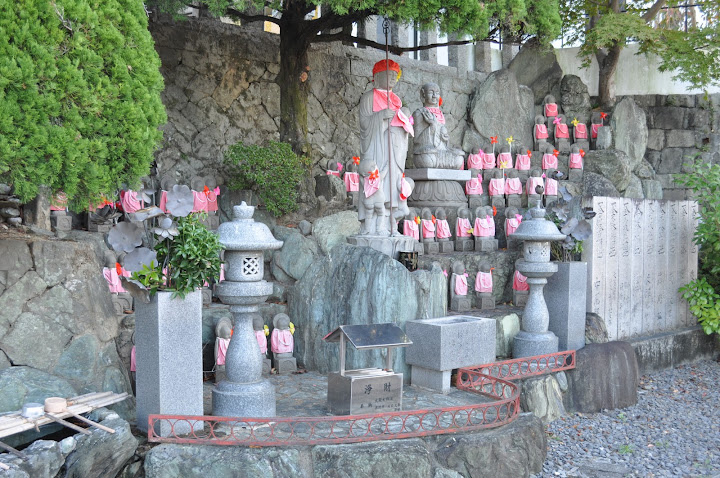
Buddhas in Bibs

Between 10 and 11 had a volunteer guide latch on to me. Interesting guy. 65 and just out for a 30km stroll. Showed me the dragon on the ceiling at number 11 and pointed out that Japanese dragons only have 3 claws vs. Chinese, which have 5. He also pretty much walked me to the hotel. Except the last crucial 50 meters in which I managed to get hopelessly lost. It was hiding behind a convenience store.

Kobo Daishi at Fujidera (No. 11)

Smallest hotel I’ve ever stayed in too. More the size of a motel, but definitely a business hotel. Cold water in the shower though. 😦

Maccas for dinner (meh), did some washing, repacked bag, sent some e-mails. Oh, forgot to mention Tokushima kinda smells. Lots and lots of cows living in sheds.

Little worried about tomorrow – rain and my first Henro Kogoroshi.


iHenro is going back online!

20 01 2012

Hey Folks!  So just a little announcement to let you all know that iHenro is going back online (^-^)b

iHenro is a new(old) blog about the 88 Temple pilgrimage in Shikoku.  If you’ve been a reader for a while you would know my plan last year to do the entire pilgrimage in April/May was canned, but I actually managed to get over to Japan in November to do part of the route.

Posts will be cross-posted to yamaonna, so you don’t need to subscribe over there to read my adventures.  And will most likely be image heavy (because I didn’t lug my huge camera around Tokushima for nothing).

I hope you enjoy!


Hike – Mt Fuji 富士山 a practical guide

8 03 2011

Mt Fuji

Quick Overview

Mt Fuji 富士山 is iconic.  As the tallest mountain in Japan (at 3776m) it gets approximately 300,000 climbers every year.  It’s topped with snow for most of the year, so the hiking season is very short – just under 2 months.  There are 4 different trails you can take to the summit, with the Yoshida Trail 吉田ルート being the most popular from the 5th station.  It’s a difficult hike in that it’s at high altitude, has changeable weather and it’s long, but it’s also possible for the not-so-fit to do the climb if they take their time and are careful.  It’s not the most beautiful hike, it’s long and hard, but watching the sunrise from the summit is something you’ll remember for the rest of your life.

Difficulty:  Hard
Season: July 1st to August 27th

Gear

  • good hiking boots
  • thick socks
  • spats (optional)
  • dress in layers – I suggest long pants, shirt or long sleeve shirt, jacket able to handle subzero temperatures.
  • rain gear – although a poncho will suffice, if the weather turns really bad you will want a proper rain suit.
  • gloves
  • beanie/hat
  • sunglasses
  • sunscreen
  • neck warmer/bandana (also useful to cover your mouth on decent when it gets really dusty)
  • flashlight or head lamp (but if you are climbing in the peak season you might not need one because everyone else will have them)
  • hiking stick (this can be bought on the mountain, and makes a great souvenir with stamps from all the different stations)
  • food to last at least a day if you don’t want to pay for overpriced noodles at mountain huts
  • water (at least 2 liters)
  • oxygen (optional)
  • first aid kit with at least plasters and pain killers
  • day pack
  • money – it’s about 8000 yen to stay in a mountain hut, and then some for any food you buy, toilets (keep some 100 yen coins handy for this!) and stamps for your walking stick.  To give you an idea, I spent about 2000 yen on just stamps, and toilets are about 200 yen per use.
  • camera!

It’s also possible to leave things in a locker at the 5th station, so I wore shorts on the bus, then changed into my hiking gear and left my summer clothes in the locker.  If you bring a face cloth and toiletries it’s possible to have a bit of a wash up in the toilets there

Waiting for sunrise

Method

There are 2 common ways to tackle Mt Fuji 富士山, non-stop or with a rest.

  • Going non-stop is not easy, due to the length of the hike and lack of sleep you will find yourself really worn out, and might have to rush to make buses on time.   You’ll need to start out at about 7 or 8 in the evening from the 5th station to make the summit by sunrise.  Sunrise is generally between 4:30 and 5:00AM in July and August.  Then starting back down around 8:00AM (or earlier), after a quick rest and breakfast at the summit, to reach the 5th station around midday or after to catch the bus back to Tokyo 東京.
  • The other easier (in my opinion) option is to start out around midday and stay at a mountain hut near the 8th station.  You’ll reach the mountain hut around 5PM, just as its starting to get dark, so you won’t need a light during the first leg.  Staying at a mountain hut costs approximately 8,000 yen, and you can just rest, or have dinner and breakfast as well.  After having a rest for about 5 hours, you start the final ascent to the summit around 2:00AM for the sunrise.  Then, as with the non-stop hike, you can start back down around 8:00AM, after a rest and some food at the summit, to catch a bus back to Tokyo 東京 around midday or later.  This method is much easier on your body than the first, although you will probably still be a bit tired and sore for a few days.

A note on crowds – from the 8th station the trail gets crowed.  Both times I have climbed Mt Fuji 富士山 I didn’t make it to the summit in time for the sunrise (but was close enough).  Mostly because of the crowds.  It can take hours to climb a section that should only take 30 minutes due to the volume of people.  Make sure you allow extra time in your calculations to allow for this.

Trails

Note – The map above only shows an approximation of the ascending trails.  All times given below are ideal, and will probably change due to weather, crowds, and your own fitness level.

There isn’t much variation between each of the trails in terms of terrain.  The Yoshida 吉田 and Fujinomiya 富士宮 trails start in a forested area before becoming rocky/ash/pumice stones like the majority of the Gotemba 御殿場 and Subashiri 須走 trails.  It is highly recommended that you don’t climb outside of the trails due to danger of avalanches, and even using the trails you might find the descent to be slippery.

Yoshida Trail 吉田ルート
Yoshida Trail Map 2010

Yoshida Trail Map 2010

The most popular trail due to the ease of access, and the fact that you can see the sunrise from the trail even if you haven’t reached the summit.  Plenty of huts and toilets, also very well signed in English, plus a map in English can be picked up at the Mt Fuji Safety Guidance Centre 富士山安全指導センター which is about an hour along the trail from the trail head.  Sometimes confused with the Subashiri trail 須走ルート on descent, so make sure you follow the signs for the trail carefully.

A detailed map of the trail can be viewed here http://www.fujikyu.co.jp/fujitozan/
en/kawaguchiko.html

Distance: Up – 7.5km, Down – 7.6km
Duration: Up – 5 hours 30 minutes, Down – 3 hours
Starting point: Kawaguchiko 5th Station 河口湖五号目 (2305m)

To and From

From the New Shinjuku South Exit 新宿新南口 you can catch a Fujikyu 富士急 or Keio Highway Bus 京王高速バス direct from the Keio Highway Bus Terminal 京王高速バスターミナル to the Kawaguchiko 5th Station 河口湖五号目.  The bus takes about 2 hours and 25 minutes, and costs 2,600 yen one way.  Make sure to reserve your seat.  Fujikyu 富士急 Highway Bus can be contacted on 0555-72-5111 and Keio Highway Bus 京王高速バス can be contacted on 03-5376-2222, or reservations can be made on the Highway Bus website https://www.highwaybus.com (only in Japanese).  Bus time tables can be viewed here in English.

It is also possible to ride the trains to Kawaguchiko station 河口湖駅 (please use either Hyperdia or Jourdan’s Route Finder to find your way), and then catch a Fujikyu 富士急Bus to the Kawaguchiko 5th Station 河口湖五号目.  This bus takes 55 minutes and costs 1,500 yen one way, and 2,000 yen return. Fujikyu’s 富士急 Bus Information from Kawaguchiko Station 河口湖駅 to Kawaguchiko 5th Station 河口湖五号目 http://transportation.fujikyu.co.jp/english/gettingaround/28.html

Mountain Huts (in ascending order)

Station Name Phone number
5 Sato Goya 佐藤小屋 090-2522-2634
6 Satomidaira Seikan-so 里見平星観層 0555-24-6090
7 Hana Goya 花小屋 0555-24-6523
7 Hinode-kan 日の出館 0555-24–6522
7 Tomoe-kan トモエ館 0555-24-6521
7 Kamaiwa-kan 鎌岩館 0555-24-6520
7 Fuji Ichi-kan 富士一館 080-1036-6691
Original 7 Torii-so 鳥居層 0555-24-6518
7 Toyo-kan 東洋館 0555-24-6517
8 Taishi-kan 太子館 0555-24-6516
8 Horai-kan 蓬莱館 0555-24-6515
8 Hakuun-so 白雲荘 0555-24-6514
8 Ganso-muro 元祖室 0555-24-6513
Original 8 Fujisan Hotel 富士山ホテル 0555-24-6512
Original 8 Tomoe-kan トモエ館 0555-24-6511
8.5 Goraikou-kan 御来光館 0555-24-6510

Subashiri Trail 須走ルート

Also a popular trail and also well orientated to view the sunrise from the trail, the Subashiri trail 須走ルート joins with the Yoshida trail 吉田ルート around the 8th station.  Again, plenty of huts and toilets.  Also sometimes confused with the Yoshida trail 吉田ルート on descent, so make sure you follow the signs for the trail carefully.

A detailed map of the trail can be viewed here http://www.fujikyu.co.jp/fujitozan/en/other.html#subashiri

Distance: Up – 7.8km, Down – 6.2km
Duration: Up – 5 hours 30 minutes, Down – 3 hours
Starting point: Subashiri 5th Station 須走五号目 (2000m)

To and From

From the JR Gotemba Station 御殿場駅 you can catch a Fujikyu 富士急 bus to the Subashiri 5th station 須走五号目.  The bus takes 1 hour and costs 1,500 yen one way or 2,000 yen return.  Fujikyu’s 富士急 Bus Information from Gotemba Station 御殿場駅 to Subashiri 5th Station 須走五号目 http://transportation.fujikyu.co.jp/english/gettingaround/29.html

Alternativly, from the Odakyu 小田急 Shin Matsuda Station 新松田駅 you can also catch a Fujikyu 富士急 bus to the Subashiri 5th station 須走五号目.  This bus takes an hour and a half and costs 2,000 yen one way or 3,000 yen return. Fujikyu’s 富士急 Bus Information from Shin Matsuda Station 新松田駅 to Subashiri 5th Station 須走五号目 http://transportation.fujikyu.co.jp/english/gettingaround/30.html

Please use either Hyperdia or Jourdan’s Route Finder to find your way to the train station.

Mountain Huts (in ascending order)

Station Name Phone number
5 Kikuya 菊谷 0550-84-5028
5 Higashi Fuji Sanso 東富士山荘 0550-84-5057
New 6 Osada Sanso 長田山荘 090-8324-6746
6 Seto-kan 瀬戸間 090-3302-4466
7 Taiyo-kan 大場館 0550-75-4347
Original 7 Miharashi-kan 見晴館 0550-84-3519
8 Shimo Edo-ya 下江戸屋 0550-84-3518
Original 8 Kami Edo-ya 上江戸屋 0550-84-3517
8.5 Goraiko-kan 御来光館 0555-24-6510

Mountain Huts on the Yoshida Trail

Gotemba Trail 御殿場ルート

The lowest starting point of all the trails and consequently the longest trail to the summit.  There are only a few mountain huts on this trail, but it is also possible to see the sunrise while on the trail.  Well signed.

A detailed map of the trail can be viewed here http://www.fujikyu.co.jp/fujitozan/en/other.html#gotenba

Distance: Up – 11km, Down – 8.5km
Duration: Up – 7 hours 30 minutes, Down – 3 hours
Starting point: Gotemba New 5th Station 御殿場新五号目 (1440m)

To and From

From the JR Gotemba Station 御殿場駅 you can catch a Fujikyu 富士急 bus to the Gotemba New 5th station 御殿場新五号目.  The bus takes 40 minutes and costs 1,080 yen one way or 1,500 yen return. Fujikyu’s 富士急 Bus Information from Gotemba Station 御殿場駅 to Gotemba New 5th Station 御殿場新五号目 http://transportation.fujikyu.co.jp/english/gettingaround/31.html

Please use either Hyperdia or Jourdan’s Route Finder to find your way to the train station.

Mountain Huts (in ascending order)

Station Name Phone number
New 5 Oishi Chaya 大石茶屋 0550-84-5076
7 Hinode-kan 日の出館 0550-89-2867
7.5 Waraji-kan わらじ館 0550-84-5070
7.5 Sunabashiri-kan 砂走館 0550-89-0703
7.5 Akaiwa Hachigo-kan 赤岩八号館 0550-84-5061

Fujinomiya Trail 富士宮ルート

The highest starting point of all the trails and consequently the shortest trail to the summit.  Popular because it can be accessed from the Tokaido Shinkansen 東海道新幹線 Shin-Fuji 新富士駅 and Mishima Station 三島駅.  However, the sunrise cannot be seen as well from this trail as the others.  Also has a number of huts and toilets.

A detailed map of the trail can be viewed here http://www.fujikyu.co.jp/fujitozan/en/fujinomiya.html

Distance: Up – 5 km, Down – 5km
Duration: Up – 5 hours, Down – 2 hours 30 minutes
Starting point: Fujinomiya 5th Station 富士宮五号目 (2400m)

To and From

From the JR Todaido line 東海道線 or Shinkansen line 新幹線 Shin Fuji Station 新富士駅 or the Shinkansen line 新幹線 Mishima Station 三島駅 you can catch a Fujikyu 富士急 bus to the Fujinomiya 5th Station 富士宮五号目.  The bus takes either 2 hours and 15 minutes (Shin Fuji 新富士) or 2 hours and 5 minutes (Mishima 三島) and costs 2,310 yen one way or 3,000 yen return (Shin Fuji 新富士) or 2,390 yen one way or 3,000 yen return (Mishima 三島).

Fujikyu’s 富士急 Bus Information from Shin Fuji Station 新富士駅 to Fujinomiya 5th station 富士宮五号目 http://transportation.fujikyu.co.jp/english/gettingaround/33.html and from Mishima Station 三島駅 to Fujinomiya 5th Station 富士宮五号目 http://transportation.fujikyu.co.jp/english/gettingaround/32.html

Please use either Hyperdia or Jourdan’s Route Finder to find your way to the train station.

Mountain Huts (in ascending order)

Station Name Phone number
New 5 Fujinomiya 5th Station 富士宮五号目 0544-22-2230
6 Unkai-so 雲海荘 0544-22-2231
6 Hoei Sanso 宝永山荘 0544-22-2232
New 7 Goraiko Sanso 御来光館 0544-22-2233
7 Yamaguchi Sanso 山口山荘 0544-22-2234
8 Ikeda-kan 池田館 0544-22-2235
9 Mannenyuki Sanso 万年雪山荘 0544-22-2236
9.5 Munatsuki Sanso 胸突山荘 0544-22-2237

At the summit

Links

Fujikyu 富士急 Bus Information for Climbing Mt Fuji page (English) http://www.fujikyu.co.jp/fujitozan/en/index.html

Japan Guide’s Climbing Mt Fuji page (English) http://www.japan-guide.com/e/e6901.html

Fuji Yoshida City’s Climb Mt Fuji page (English) http://www.city.fujiyoshida.yamanashi.jp/div/english/html/climb.html

Highway Bus Reservations (Japanese) https://www.highwaybus.com

My photos from climbing Mt Fuji in 2010 http://www.flickr.com/photos/michelelisa/sets/72157624822571916/with/4933902022/

Useful Kanji

Fujikyu 富士急
Fujinomiya 富士宮
Fujinomiya Trail 富士宮ルート
Fujinomiya 5th Station 富士宮五号目
Gotemba 御殿場
Gotemba New 5th Station 御殿場新五号目
Gotemba Station 御殿場駅
Gotemba Trail 御殿場ルート
Kawaguchiko station 河口湖駅
Kawaguchiko 5th Station 河口湖五号目
Keio Highway Bus 京王高速バス
Keio Highway Bus Terminal 京王高速バスターミナル
Mishima 三島
Mishima Station 三島駅
Mt Fuji 富士山
Mt Fuji Safety Guidance Centre 富士山安全指導センター
New Shinjuku South Exit 新宿新南口
Odakyu 小田急
Shin Fuji 新富士
Shin-Fuji Station 新富士駅
Shinkansen line 新幹線
Shin Matsuda Station 新松田駅
Subashiri 須走
Subashiri trail 須走ルート
Subashiri 5th Station 須走五号目
Todaido line 東海道線
Tokaido Shinkansen 東海道新幹線
Tokyo 東京
Yoshida 吉田
Yoshida Trail 吉田ルート

Second-hand hiking maps/books GIVEAWAY!

4 03 2011

GIVEAWAY HAS ENDED thanks for looking!

Yes, that’s right, a GIVEAWAY!

So, I only have a couple more weeks left living in Tokyo, and I would like my hiking maps and a few books to go to someone who wants them.

To give you an idea I have Mapple Yama to Kougen Chizu number 13, 14, 22, 23, 29 and 30 maps, Day Walks Near Tokyo, A Flower Lover’s Guide to Tokyo, a couple of hiking books/magazines in Japanese, and a few more books in English.

What you have to do is leave a comment with your email address before 5pm JST Sunday March 13th down below, and tell me what hikes you want to do in and around Tokyo.  Please only enter if you live in Japan, I will only post the items within the country.

The lucky person to inherit will be contacted by email, and I’ll include a full list of what I’ll send you.  If you don’t want any of the items then please let me know so I can offer it to another person. And then the books/maps/etc will be mailed out to you as soon as possible!

Oh, and if anyone would like a rice cooker too please let me know!


Hike – Oze Marsh 尾瀬ケ原

21 01 2011
Oze Marsh and Mt Hiuchigatake

Oze Marsh and Mt Hiuchigatake

Quick Overview

This hike is probably one of the best within a few hours of Tokyo. Oze 尾瀬 is the largest marsh lands in Japan and is very popular during the summer season, but with good reason. It’s famous for skunk cabbages (ugly name, pretty flower) in late May, and autumn colours in late September. It has excellently maintained board walks, and plenty of accommodation within the National Park. A very easy hike, of which the marsh alone could be done as a day trip, but best done overnight so you can see the full beauty and variety of nature Oze 尾瀬 offers.

Distance: 23 km
Duration: 2 days (approx 9 to 10 hours in total)
Difficulty: easy
Season: May to early October
Starting point: Hatomachitoge 鳩待峠
Finishing point: Oshimizu 大清水

Maps

A full map of the hike can also be viewed at GPSies

Although this hike is the only major hike in the area, there might not be any maps available at the Oze Visitor Centres so I recommend you buy a map. The Mapple 山と高原地図 series number 14 map is of the region, and is available on Amazon.co.jp. Note, this map is in Japanese, but does include some English and furigana.

The Hike

Day One – Hatomachitoge 鳩待峠 to Miharashi 見晴

Start of the trail

Start of the trail

The bus will terminate in front of a Mountain hut in the car park at Hatomachitoge 鳩待峠. The trail head to Oze marsh 尾瀬ケ原 is signed and easy to find. You will be told to wipe your boots on a mat before walking through a sensor (for counting people) and entering the National Park. The first part of the hike is very easy, downhill on stairs and board walks for about an hour until you reach Yamanohana 山ノ鼻.

Yamanohana 山ノ鼻 has a Visitor Centre which is worth stopping at to pick up a map and up to date information about the weather and facilities in the national park. From here the marsh truly begins. Past the Visitor Centre there is a circular boarded trail on the left, which only takes about 40 minutes to walk if you want to. Or you can start heading further into the marsh by taking the boarded trail on the right.

Following the trail on the right you will see Mt Hiuchigatake 燧ヶ岳 in the distance. The trail will wind through the marshes, over creeks, and through small wooded areas on your way to Miharashi 見晴. Depending on the season, the marshes will be green with flowering white skunk cabbage (late May), yellow alpine lilies (late July), or turning golden with the surrounding mountains covered in an autumn patchwork of colours (late September/early October).

About 40 minutes after leaving Yamanohana 山ノ鼻 there is a branch in the trail, where you can either turn left or continue ahead. Both trails will lead you to the northern end of the marsh, although the trail on the left takes about 2 hours to reach Miharashi 見晴. The map above shows the trail if you continue ahead, and takes 80 minutes to reach Miharashi 見晴. Along both trails you will find benches and some alternative trails, but as long as you keep heading towards Mt Hiuchigatake 燧ヶ岳 you will reach the northern end of the marsh.

Miharashi 見晴 is a good place to stay overnight due to an abundance of mountain huts and fresh water. It is also the starting point of the hike to Lake Oze. All mountain huts offer dinners and breakfast as well as comfortable futons. Some even have baths, although you are unable to use soap. Check out the mountain hut section for details.

Miharashi Huts

Miharashi Huts

Day Two – Miharashi 見晴 to Oshimizu 大清水

Breakfast and check out is early in a mountain hut, so you should have plenty of time to make it to the Oshimizu 大清水 bus stop. From Miharashi 見晴 follow the trail up between the mountain huts. It won’t be very long until you reach a Y intersection. If you have the time and the will, you can head to the peak of Mt Hiuchigatake 燧ヶ岳 on the trail to the left (please look at the Mapple 山と高原地図 series number 14 map for more details), but if you just want to head straight to Lake Oze 尾瀬沼 take the trail on the right. It will take about 2 hours to Lake Oze 尾瀬沼, walking through a forested area and over a low pass.

At Lake Oze 尾瀬沼 you can either walk around the lake in the clockwise or anti-clockwise direction. The clockwise direction, although a longer distance, is easier and has better maintained board walks. The map above shows the clockwise direction trail.

Lake Oze

Lake Oze

From where you started walking alongside the lake, it will take about an hour to reach the Lake Oze Visitor Centre 尾瀬沼ビジターセンター. There are a few trails branching off, but just stick to the lake and follow the signs.

At Lake Oze Visitor Centre 尾瀬沼ビジターセンター there are more mountain huts, toilets and fresh water. There is also a small gift shop and café where you can stop to get a cup of coffee. Once you are finished there, continue walking on the trail between the mountain huts and head towards Sanpeishita 三平下. It will take about 20 minutes to reach, and it’s where you will leave the lake start back to the bus stop.

At Sanpeishita 三平下 head uphill until you reach Sanpei Pass 三平峠, the highest point on the hike. It should only take about 20 minutes, and from there it’s all downhill. In about 50 minutes you’ll reach the hut at Ichinose 一ノ瀬. From here the trail becomes a forestry road, and is a really easy trek downhill for an hour until you reach the huts, shops, toilets and bus stops at Oshimizu 大清水.

Mountain Huts

This information was current for the 2010 season. Please check the latest Mapple 山と高原地図 series number 14 for up to date phone numbers, or the websites listed.

Prices are a guide only and may vary, but usually include dinner and breakfast. All websites linked are only in Japanese.

Hatomachitoge 鳩待峠

Hatomachitoge Sansou 鳩待峠山荘

0278-58-7311

approx. 8500 yen

Yamanohana 山ノ鼻

Kokumin Shukusha Oze Lodge 国民宿舎尾瀬ロッジ

0278-58-4158

approx. 8500 yen

Shibutsu Sansou 至仏山荘

0278-58-7311

approx. 8500 yen

Yamanohana Goya 山ノ鼻小尾

0278-58-7411

approx. 8500 yen

Nakatashiro 中田代

Ryuuguu Goya 龍宮小屋

0278-58-7301

approx. 8500 yen

Yoshipporitashiro ヨシッ堀田代

Touden Goya 東電小屋

0278-58-7311

approx. 8500 yen

Akatashiro 赤田代

Onsen Goya 温泉小屋

0241-75-222

approx. 8500 yen

Motoyu Sansou 元湯山荘

0278-58-7311

approx. 8500 yen

Miharashi 見晴

Oze Goya 尾瀬小屋

090-8921-8342

0241-75-2225

approx. 8500 yen

Daini Chozo Goya 第二長蔵小屋

0278-58-7100

approx. 8000 yen

Harano Goya 原の小屋

090-8921-8314

0241-75-2038

approx. 8500 yen

Hiuchi Goya  燧小屋

090-1062-1395

0241-75-2059

approx. 8400 yen

Hinoemata Goya 桧枝岐小屋

090-3405-6460

0278-58-7050

approx. 8500 yen

Yashiro Goya 弥四郎小屋

090-1456-7500

0467-24-8040

approx. 8400 yen

Ozenuma Visitor Centre 尾瀬沼ビジターセンター

Ozenuma Hutte 尾瀬沼ヒュッテ

0241-75-2350

090-7064-4183

approx. 8500 yen

Chozo Goya 長蔵小屋

0278-58-7100

approx. 8000 yen

Sanpeishita 三平下

Ozenuma Sansou 尾瀬沼山荘

0278-58-7311

approx. 8500 yen

Oshimizu 大清水

Oshimizu Goya  大清水小屋

0278-58-7370

approx. 6825 yen

Monomi Goya 物見小屋

0278-58-7026

approx. 6825 yen

To and From

There are a number of different ways to reach Oze during the season.

By Bus
During the hiking season Kanetsu Kotsu 関越校通 runs buses from Shinjuku Station’s New South Exit 新宿駅新南出口 at around 7am and arrive at Tokura 戸倉 and Oshimizu 大清水 around 11am. You can do the hike in reverse from Oshimizu 大清水, or from Tokura 戸倉 you can change bus to Hatomachitoge 鳩待峠. The bus from Shinjuku 新宿 to Tokura 戸倉 or Oshimizu 大清水 costs 3,700 yen one way, and 7,000 yen return. The bus from Tokura 戸倉 to Hatomachitoge 鳩待峠 takes 40 minutes and costs 900 yen. The return bus leaves Oshimizu 大清水 for Shinjuku 新宿 about 3pm. See the Kanetsu Kotsu 関越校通 homepage (Japanese) for more information.

By Overnight Bus
Kanetsu Kotsu 関越校通 also runs the above buses overnight. They leave Shinjuku 新宿 around 10pm and arrive at Tokura 戸倉 or Oshimizu 大清水 around 3:30am. Note, the buses from Tokura 戸倉 to Hatomachitoge 鳩待峠 start running approximately at 4:40am. Costs are the same. See the Kanetsu Kotsu 関越校通 homepage (Japanese) for more information.

By Train and Bus
As always, the following routes are just recommendations. Please use Hyperdia or Jorudan’s Train Route Finder to find the most suitable route for you!

From Tokyo 東京 you can take the Shinkansen to Takasaki 高崎, and then change to the Joetsu Line 上越線 local train to Numata 沼田. By Shinkansen this takes just over an hour and a half, and 5,430 yen. You can also catch the regular train from Ueno 上野 on the Takasaki line 高崎線 to Takasaki 高崎, and change to the Joetsu Line 上越線 as described above. Using the regular train takes about 2 hours and a half and costs 2,520 yen.

From Numata Station 沼田駅 you have to catch a Kanetsu Kotsu 関越校通 bus to Tokura 戸倉, which takes about an hour and a half and costs 2,100 yen. From Tokura 戸倉 you then catch the same bus mentioned above to Hatomachitoge 鳩待峠. This leg takes 40 minutes and costs 900 yen. On the return from Oshimizu 大清水 you can catch the bus direct to Numata Station 沼田駅, with no need to change at Tokura 戸倉. The return leg takes an hour and 40 minutes and costs 2,200 yen.

Bus timetables are a little tricky to read, but here is the timetable for Numata 沼田 to Tokura 戸倉/Oshimizu 大清水, for Oshimizu 大清水 to Numata 沼田, and Tokura 戸倉 to Hatomachitoge 鳩待峠 (all in Japanese). Please make sure you can reach your bus stop in time to catch a bus home. If you are in doubt the Visitor Centres have the most up-to-date information and can help you with your planning.

By Overnight Train
Tobu Railways 東武鉄道 has an overnight train that runs from Asakusa 浅草 to Aizu Kougen Ozeguchi Station 会津高原尾瀬口駅 at least once a week during the season. The train leaves Asakusa 浅草 at 11:55PM and arrives at Aizu Kougen Ozeguchi Station 会津高原尾瀬口駅 at 3:18AM. From Aizu Kougen Ozeguchi Station 会津高原尾瀬口駅 you catch an Aizu bus 会津バス at 4:20AM and arrive at Numayamatoge 沼山峠 at 6:10AM. This hike will use a different trail, heading south to the Oze Lake Visitor Center 尾瀬沼ビジターセンター from Numayamatoge 沼山峠. Please look at the Mapple 山と高原地図 series number 14 map for the trail. The cost of the overnight train starts at 9,200 yen return, but there are a few options, like catching the return bus from either Oshimizu 大清水 or Hatomachitoge 鳩待峠 instead. The Tobu Railways 東武鉄道 homepage has more details (in Japanese).

Links

Oze National Park Homepage http://www.oze-fnd.or.jp/ This page also has a good English map

Kanetsu Kotsu 関越校通 http://www.kan-etsu.net/

Tobu Railways 東武鉄道 Oze Midnight Train http://www.tobu.co.jp/2355oze/plan_ozeyako.html

My Flickr photo set from Oze http://www.flickr.com/photos/michelelisa/sets/72157625063485259/

Map of hike on GPSies http://www.gpsies.com/map.do?fileId=jktcwsweidxosdjv

Useful Kanji

Aizu bus 会津バス
Aizu Kougen Ozeguchi Station 会津高原尾瀬口駅
Akatashiro 赤田代
Asakusa 浅草
Hatomachitoge 鳩待峠
Ichinose 一ノ瀬
Joetsu Line 上越線
Kanetsu Kotsu 関越校通
Lake Oze 尾瀬沼
Lake Oze Visitor Centre 尾瀬沼ビジターセンター
Miharashi 見晴
Mt Hiuchigatake 燧ヶ岳
Nakatashiro 中田代
Numata 沼田
Numata Station 沼田駅
Numayamatoge 沼山峠
Oshimizu 大清水
Oze 尾瀬
Oze Marsh 尾瀬ケ原
Sanpei Pass 三平峠
Sanpeishita 三平下
Shinjuku 新宿
Shinjuku Station’s New South Exit 新宿駅新南出口
Takasaki 高崎
Tobu Railways 東武鉄道
Tokura 戸倉
Tokyo 東京
Ueno上野
Yamanohana 山ノ鼻
Yoshipporitashiro ヨシッ堀田代


Five photos of Oze

8 11 2010

Okay, so I’m a little snap happy. When I went to Oze in October I took over 200 photos… Which was then narrowed down to the 87 you can see in my Flickr set. And now I’ve chosen my 5 favourites I’d like to share with you.


Firstly, most of the hike is walking through landscape like this. Unfortunately the sun didn’t like me very much on that day, and I wasn’t really able to capture the true colour of the marshlands. It was a much more vibrant orange, which you’ll see in a later photo.


However the partially cloudy conditions meant the reflections in the ponds spotted here and there were quite pretty.


And the Autumn colours were just gorgeous!


And although it was a little wet too, it didn’t take away from the scenery.


Lastly, this photo taken at Oze Lake gives you a better idea of the colour of the marsh grasses. Just beautiful. Autumn is rapidly becoming my favourite season, but next spring don’t be surprised if I start waxing lyrical about the Cherry Blossoms!

Please click on the photos to view larger versions, or check out all my photos on Flickr!


Golden Oze

15 10 2010

Well, even though I have no way of uploading this at the moment of typing, I feel I just have to write down my feelings.
See, right now, at 4:43pm Thursday, I’m sitting in my own room in a mountain hut at the northern end of Oze marsh.
And I am starving, despite having a late lunch at 1. Luckily dinner is at 5:30. And then lights out at 8:30. It feels kinda novel in a way to have no phone reception and plans to go to bed so early, but I’m in a beautiful part of japan, and it also kinda fits.
Oze is just beautiful. I love autumn colors to start with, so that doesn’t hurt, but when I look at the hills around me it’s like a glorious natural patchwork quilt.
And the marsh itself was literally glowing golden in the afternoon sun. Even the boardwalk seemed to complement the setting.
It’s been surprisingly easy to get here and get around. I had worked myself up a bit about the whole having to catch a bus and not having a reservation at this mountain hut. But it all worked out perfectly. I had no reason at all to worry. I just hope tomorrow goes as smoothly.
But I’m sure, just being around this glorious natural beauty will be enough to take away my stresses.
Not looking forward to going back to Tokyo tomorrow night *sigh*


Hike – Mt Nyukasa (Fujimi Panorama) 入笠山 (富士見パノラマ)

22 09 2010

Quick Overview

Nyukasa Marsh

Nyukasa Marsh

Although a bit of a trek from Tokyo 東京, Fujimi Panorama 富士見パノラマ and Mt Nyukasa 入笠山 is a great trip for flower lovers during spring, in particular it is famous for its Lily of the Valley, or Suzuran すずらん.  During winter it becomes a ski resort, but it is still possible to climb to the summit of Mt Nyukasa 入笠山 to see the 360 degree panorama, which includes views of Mt Fuji 富士山, Yatsugatake 八ヶ岳, and the Japanese Northern, Central and Southern Alps 北, 中央, 南アルプス.  The climb is really easy, with only 30 minutes up hill to the highest peak, and the rest of the trail is fairly flat with forests and marshlands.

Duration:  3 hours, 15 minutes
Difficulty: easy
Season:  Suitable all year (becomes a ski slope in winter, with snowshoeing to the summit)
Starting point:  Fujimi Panorama Resort 富士見パノラマリゾート
Finishing point:  Fujimi Panorama Resort 富士見パノラマリゾート

Maps

This map of the hike  can also be viewed at GPSies

The Hike

From Fujimi Station 富士見駅, take the exit and in the small car park there should be signs for the Fujimi Panorama Free Shuttle Bus 富士見パノラマ無料送迎バス.  Just catch the bus to the lower Fujimi Panorama 富士見パノラマ carpark, about 10 minutes, buy your return gondola ticket (1,600 yen) and then walk up between the shops and then right along the bottom of the ski slopes to reach the gondola station.

Nyukasa Suzuran Garden

Nyukasa Suzuran Garden

The gondola will take you up a fair way, and when you reach the top (Sancho Station ゴンドラ山頂駅) just follow the signs to the right towards the Nyukasa Suzuran garden 入笠すずらん公園.  The garden itself isn’t very large, but it contains a number of different varieties of wild flowers.  The season for Lilly of the Valley (Suzuran すずらん) is throughout June , but there are other flowers blooming all through spring and into summer.Once you are finished in the Nyukasa Suzuran garden 入笠すずらん公園, head up hill, but before starting to climb up the stairs, take the path to the right around the hill.  Be careful to take the correct path, as there are actually two, one for walkers, and the other for mountain bikers who will race past, but don’t worry, its pretty obvious which is which.

Follow the path around the hill for about 10 minutes, before crossing a road, and entering a gated area.  This is the start of Nyukasa Marsh 入笠湿原.  Within the marsh make sure to keep to the board walks, but despite them, it’s still a very pretty area, also with a number of different flowers like irises.

Nyukasa Marsh

Nyukasa Marsh

When you are finished there, take the exit on the opposite side to where you entered.  There will be a mountain hut here where you can buy lunch and the only bathroom on the track.  Continuing on, take the road to the left, and shortly there will be a path on the left through a forested area.  Follow this path for about 10 minutes.

Once you leave the forested area, you will be able to see Mt Nyukasa 入笠山 directly ahead.  Half of the mountain is grassland again.  Keep following the path until you reach another road, and follow that up.  You will come to another building that has an observatory, but keep heading up hill to the left of it.  From this point it will take about 30 minutes to the summit of Mt Nyukasa 入笠山, with only one alternative trail headed left.  Just keep to the right and shortly before the summit the trees will give way to the barren peak.

Mt Nyukasa Panorama

Mt Nyukasa Panorama

From Mt Nyukasa 入笠山 there is a 360 degree view.  On a clear day you can see Yatsugatake 八ヶ岳, the Japanese Northern, Central and Southern Alps 北, 中央, 南アルプス, and even Mt Fuji 富士山.  When you are ready to continue, head down the path opposite to the one you climbed up on.  Walking down hill will mainly be through a bamboo area, and after 15 minutes you should reach the road.  Head right, and about 5 minutes later you will see Kubikiri spring 首切清水 on the right.

Kubikiri Spring

Kubikiri Spring

Kibukiri 首切 actually means decapitation, and this spring was named that because couriers travelling to and from the gold mines in the area in past days would stop for a drink and have their heads cut off by bandits.  Nowadays the water isn’t safe to drink, not because of bandits, but because cattle is grazed in the area.

Keep heading on the road and after about 20 minutes you’ll reach Oahara Marsh 大阿原湿原.  Again, stick to the board walks here.  Unfortunately you can only walk around the marsh, but it’s still very scenic, especially during the fall season.  To walk around the marsh only takes about 40 minutes, and will return you to the road you were on previously.  Now just follow the road back to the Nyukasa marsh 入笠湿原, taking approximately 50 minutes.

Oahara Marsh

Oahara Marsh

From here, just backtrack through the wooded area around the hill for 15 minutes to return to Gondola Sancho Station ゴンドラ山頂駅.

To and From

As always, the following routes are just recommendations.  Please use Hyperdia or Jorudan’s Train Route Finder to find the most suitable route for you!

From Shinjuku Station 新宿駅 you can either catch the Azusa あずさ or the Chuo Line 中央線, headed towards Nagano 長野 and Tachikawa 立川 respectively.  The Azusa あずさ does the trip to Fujimi Station 富士見駅 in about 140 minutes, Unreserved seats are 5,360 yen, or Reserved seats are 5,870 yen.  The Chuo line 中央線 takes approximately 230 minutes and costs 3,260 yen.  On the Chuo line you will probably have to change trains 3 times to reach Fujimi Station 富士見駅, at Tachikawa 立川, Hachioji 八王子 and Kofu 甲府.

Unfortunately Fujimi 富士見 is outside of the area included in the JR Holiday pass.

On weekends and public holidays from the end of April to the start of November, and during the ski season, the Fujimi Panorama Resort 富士見パノラマレゾート runs a free shuttle bus from Fujimi Station 富士見駅 to the lower Suzuran Gondola station すずらんゴンドラ駅.

From the lower gondola station, ride it up to Gondola Sancho Station ゴンドラ山頂駅.  A return ticket on the gondola costs 1,600 yen.  The gondola starts running at 9:30am, and stops at 4:30pm.

Links

Fujimi Panorama Resort (Japanese) http://www.fujimipanorama.com/summer/index.php

Fujimi Kougen Tourist Information (Japanese) http://www.fujimikougen.info/

Hiking course map (Japanese) http://www.fujimikougen.info/hiking/img/02.pdf

Map of hike on GPSies http://www.gpsies.com/map.do?fileId=rqkqvzhbbypoklzm

My Flickr photo set from Mt Nyukasa http://www.flickr.com/photos/michelelisa/sets/72157624475871102/

Useful Kanji

Azusa あずさ
Chuo Line 中央線
Central Alps 中央アルプス
Fujimi 富士見
Fujimi Panorama 富士見パノラマ
Fujimi Panorama Resort 富士見パノラマリゾート
Fujimi Panorama Free Shuttle Bus 富士見パノラマ無料送迎バス
Fujimi Station 富士見駅
Gondola Sancho Station ゴンドラ山頂駅
Hachioji 八王子
Kibukiri 首切
Kubikiri spring 首切清水
Kofu 甲府
Lily of the Valley (Suzuran) すずらん
Mt Fuji 富士山
Mt Nyukasa 入笠山
Nagano 長野
Northern Alps 北アルプス
Nyukasa Marsh入笠湿原
Nyukasa Suzuran garden 入笠すずらん公園
Oahara Marsh 大阿原湿原
Shinjuku Station 新宿駅
Southern Alps 南アルプス
Suzuran Gondola station すずらんゴンドラ駅
Tachikawa 立川
Tokyo 東京
Yatsugatake 八ヶ岳


Fuji Foto Spam!

28 08 2010

Okay, this isn’t a ‘real’ hiking post, but since it’s all about Mt Fuji I figure I can cut myself some slack.

If you’ve ever considered climbing Mt Fuji, someone has probably told you the saying “You’re a fool if you never climb Mt Fuji, and a fool if you climb it twice” (富士山にのぼらないバカ、2度のぼるバカ).  Well, I am now officially back in the ‘fool’ category, with my second climb of Mt Fuji occurring last Friday/Saturday.

Although I will do a write-up sometime in the near future, I wanted to share my photos (because hiking up that mountain with my DSLR was heavy but worth it!), so without further ado ~ Mt Fuji!

The first thing about Mt Fuji is that you can’t escape the crowds.  Here at the 5th station they all assemble to be herded up the mountain by tour operators.

The sign at the start of the Yoshida Trail –

Not far past the 6th station you leave the trees behind and the trail begins to get steeper –

At the 7th stations you start to pass mountain huts –

And you can get your hiking stick branded with a stamp at the huts –

Looking back at the 7th station huts –

After hiking up to the 8th station we had a bit of grub and tried to sleep in the Fujisan Hotel.  Then, at 2am, we set out for the summit.  Unfortunately we didn’t quite make it before sunrise, but the view from where we stopped was spectacular anyway –

And finally, a few minutes after 5, the sun appeared!

After watching the sunrise, we started on the last 30 minute hike to the summit –

Around 6am we reached the summit, where we bought some postcards, and had some breakfast at the peak huts –

And took some photos at the crater –

Before finally, starting downhill  –

It’s a hard, long hike, but very rewarding and something I would do again if I was given the chance.  If you want to see some more photos, please check out my flickr set!