and so this is Christmas~

20 01 2010

About a month late…  but…  well…  anyway….

So with my parental units here for Christmas, my mother’s one wish was to have a ‘white one’.  And with that in mind, we planned to go to Yuzawa Onsen in Niigata.

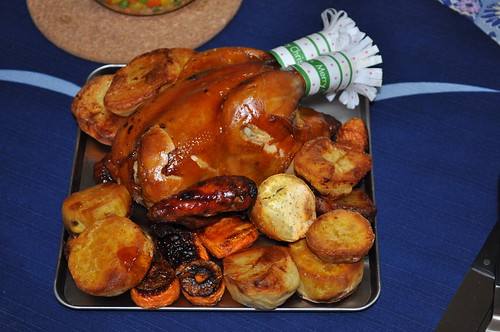
Since we were away for Christmas Day, we had our family lunch of roast chicken on the Tuesday.  My local supermarket carried whole chickens this year, so it really was a proper christmas lunch

with pudding (^-^)b

The recipe for this pud is from Video Jug, and I highly recommend it.  Everyone (work mates too) said it was delish!

In the evening we went to the illumination at Tobu Zoo (because what’s Christmas in Japan without an illumination?).

The theme was ‘Four Seasons’ but really, they only focused on the cherry blossoms for spring (>_<).

Wednesday, Thursday and Friday were spent at the snow.  We had a good package, and despite none of us being able to ski or snowboard we had a good time.  Well, at least it was amusing for my parents to watch me fall down *trying* to snowboard…

To check out some more photos please head over to my flickr page!


Kyushu Photo Blog

5 01 2010

My apologies for the irregular postings over the last few months.  Between the parental unit invasion and travel I’ve hardly been on the internet.  But I finally got around to sorting out my photos from Kyushu, and without further ado, here’s the photographic evidence. (warning, very image heavy!)

Day one in Nagasaki:

Oura Catholic Church, which is Japan’s oldest standing wooden church.

Glover Garden, a garden that is the home to 7 western style residences from the Meiji period.

Kakuni Manju, BBQ pork in a steamed bun.  Very very yummy!

Dejima is the island where Dutch traders were allowed to trade with the Japanese during the Tokugawa period.  Due to the Shogun closing Japan to westerners, Dejima was built to allow trade with the Dutch to continue.  Over the years the island was lost to reclaimed land, but recently the island and the buildings have been restored.  I found Dejima to be really fascinating.

Saru Udon

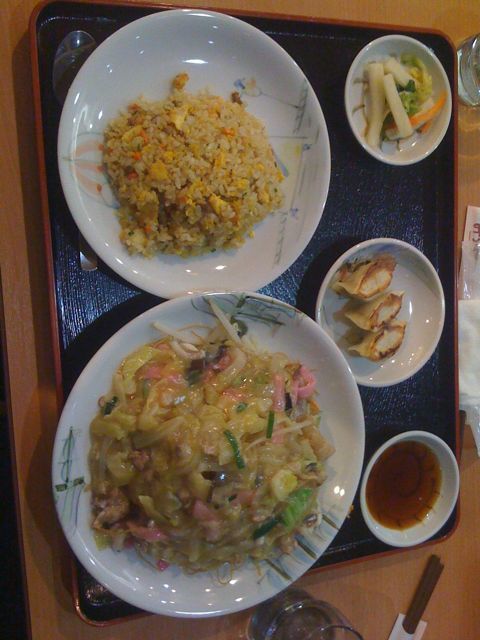
Champon, a Nagasaki speciality, is a cross between Japanese and Chinese food.  Many of the dishes in Kyushu have Chinese influences.

Day Two in Nagasaki:

A visit to the Peace Park, which is just up the road from the hypocenter of the atomic bomb blast.

Here is the monument (on the right) which marks the hypocenter, and a piece of the Urakami Cathedral that survived the bomb blast.  The Atomic bomb museum is only a short walk from here, and really, I can’t use words to describe it.  Going to a museum like this is one of the most sobering and somber experiences you can have.  If you have the chance, go!

Another relic of the bomb blast, the other half of this Torii gate was knocked down by the explosion.

Kitties!

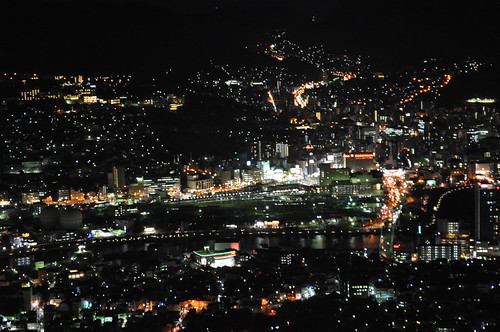
Nagasaki City night view, said to be one of the three best in Japan.  Here you can see Nagasaki Station in the center of the picture.

Day 3 from Nagasaki to Kumamoto via Shimabara:

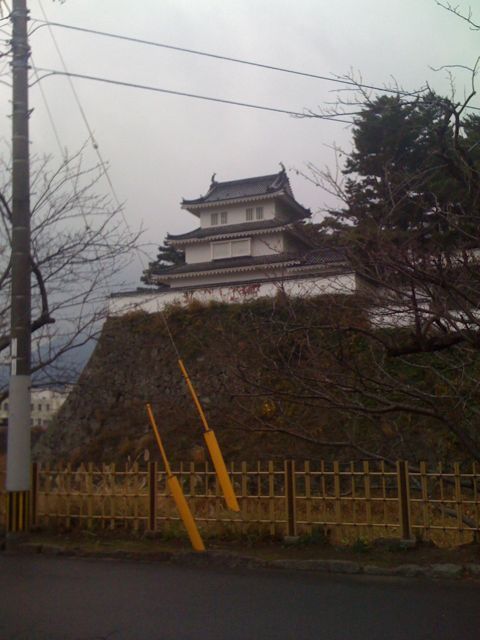
We caught the train from Nagasaki to Shimabara this day, and had a quick look around Shimabara Castle.  Shimabara is the peninsula where many Japanese Christians were killed in a revolt, and the castle had many relics of hidden Christians in the area on display.  However, the castle was nothing compared to the one at Kumamoto, so I won’t post any photos apart from this –

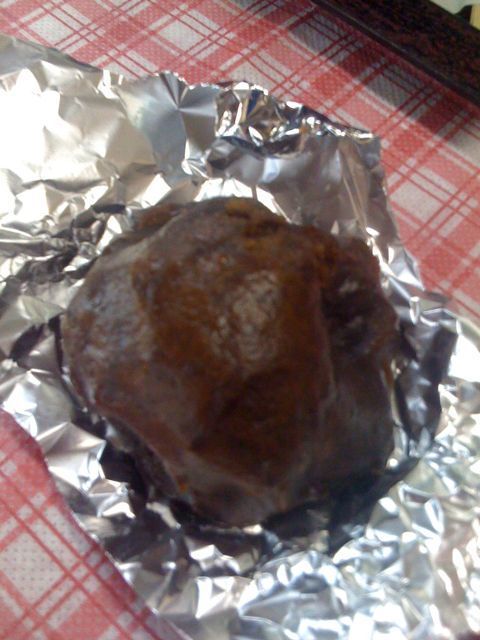
A Shimabara food, Rokobe Manju, a black steamed bun with sweet potato inside.

After that we went to the ferry and were in Kumamoto by sundown.

Day 4 in Kumamoto:

We started out by going to Kumamoto Castle, which was built by Kato Kiyomasa (above).

A castle turret with the walls of Nimaru and Honmaru (inner and second circle of the grounds).

A close up of the stone walls.

The main tower of the castle.

View from the main tower, looking at the reconstructed palace.

The guided meeting room of the lord of the castle (inside the palace).

Although a lot of the building are reconstructed, there are a few originals, and plenty to see.  We literally spent all morning there, and didn’t even realize we had missed lunch!

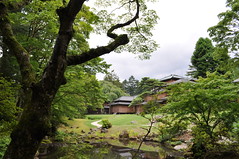
Next off to Suizenji Jojuen garden, which was first started in 1632, and depicts the 53 stations of the old Tokaido highway.  You can even see a miniature Mt Fuji.

Dinner that night was Kumamoto ramen.

Firstly Tonkotsu ramen.

Then a salt flavored broth.

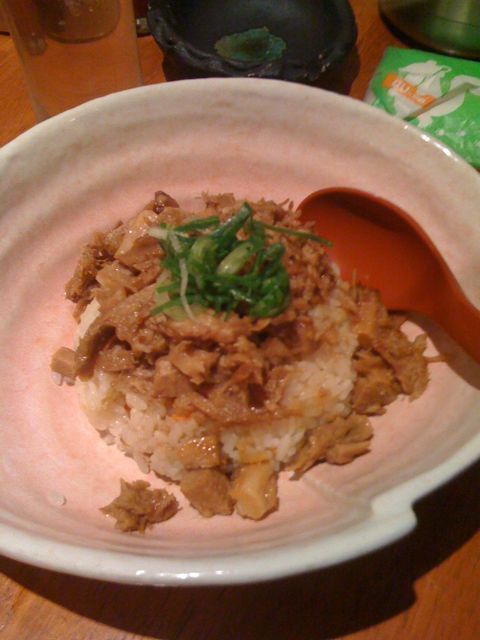
And finally a Chinese style simmered pork on rice.  All very very yum!

Day 5 in Kumamoto:

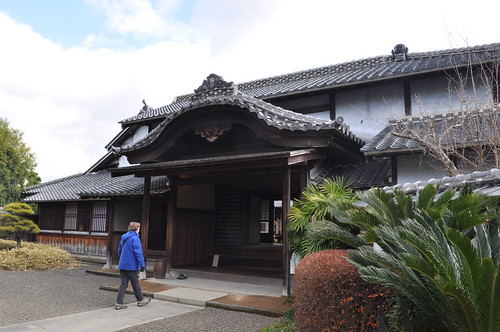
We wanted to make a day trip to Aso, but unfortunately the weather didn’t agree with us, and instead we went to the Former residence of Hosokawa Gyobu, a Samurai house.

Mum and Dad found it really interesting because they had never been into a Samurai house like this.  There were quite surprised at how big it was.

Day 6 returning home:

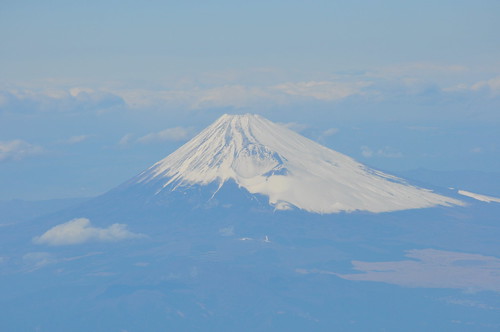
Finally, on the plane home we were able to see Mt Fuji, and final treat to the holiday.

To see some more photos, please check out my Flickr set!


Kyushu day 4- Kumamoto day 1

18 12 2009

Today was our first day in Kumamoto. After eating breakfast at the hotel we set off to explore the Kumamoto castle grounds. The complex is actually quite extensive and includes a number of original stone walls, a few original buildings, and a few replicas. The main donjon is a replica, but looks spectacular, and the replica palace in the honmaru was gorgeous. All in all, it was really intresting, and we spent over 4 hours there before we even realised.
Next it was across town to Suienji Garden. This garden was built in the 1600’s, and simulates the Tokaido highway from Tokyo to Kyoto. It even had a minature Mt Fuji. It was very pretty, and mum was particular happy.
We ended the day with some Kyushu ramen (pictured below). Kyushu is famous for it’s tonkotsu ramen, which is my favourite, so I was really happy. We had one tonkotsu ramen, one salt flavored, and one meat and rice dish. Overall a rich meal, but really tasty!


Kyushu day 3- Nagasaki to Kumamoto via Shimabara

17 12 2009

So today we travelled from Nagasaki to Kumamoto. There are a few different ways to make this trip, but we decided to catch the train to Shimabara so we could see the castle there (there’s a picture below). The Shimabara castle isn’t the original, but contained some interesting displays on Christians in Kyushu and the local fedual families.
At the castle we stopped for lunch and I had a style of udon I had never seen before – maruten udon (pictured below). It was yummy, but as my mother commented, it was kinda like seafood extender. We also tried Rokube manju, a black steamed cake with sweet potato inside. It’s a Shimabara speciality and was quite yummy.
After the castle we had to catch a ferry to Kumamoto, where we will spend the rest of the trip. It doesn’t sound like we did much today, but we did spent over 3 hours travelling.
Hopefully we will have good weather for the last couple of days, but it seems we have the threat of snow. Fingers
crossed that if it does snow it won’t interfer with our plans!


Kyushu- Nagasaki day 2

16 12 2009

Oh I’m so tired! you are lucky to get a blog update today!
Okay, anyway, Nagasaki day 2! Today was a little slower, and certainly more introspective (not sure if that’s quite the right word…). We started the day out by catching a train to Urakami and the Peace Park. This park is built to commemorate peace and has a large statue to represent atomic weapons, peace and prayers for the victims of the atomic bomb blast. Down the road from here is also the epicentre of where the atomic bomb over Nagasaki exploded. And then right next to that was the Atomic Bomb Museum. Words really can’t describe what these places are like. It’s amazing that so much distruction occurred there, and yet now they are healthy clean places. And being able to see the affects of the bomb, walk around the few exsisting ruins. It’s a very sombering experience. Sad, but if you do ever go to Hiroshima or Nagasaki, the atomic bomb museums are a must visit.
We then walked a little further to the one legged Torii gate which is pictured below. The other half of the gate was blasted down by the bomb, while this half remains standing. Quite surreal really.
After having some lunch (no remarkable foods today) we went to some temples, and then back to our hotel. This was to rug up as just before dusk we caught the rope way up Mt Inasa to see the view of Nagasaki. Nagasaki is said to have one of the top three night views in Japan. You can also see a picture below. We have been to Hakodate (another one) and although Nagasaki doesn’t have such a nice shape as there, the city was quite clear and beautiful.
Tomorrow we will be travelling to our next city, so goodbye to Nagasaki!


Kyushu day 1- Nagasaki

15 12 2009

Well, I’ve been a little lax with updates these last couple of weeks, but with good reason! School exams have been happening, the JLPT was on the 6th, and my parents have come for a visit! Right now we are holidaying in Kyushu, where it’s surprisingly colder than Tokyo!
So our Kyushu trip has started in Nagasaki, home of Champon, Plate Udon, and Castella, to name a few food items. Today we went to Glover Garden, which is the site of a former residence of a foreign businessman. The gardens have been expanded and a number of other historically significant western style buildings have been moved there. It was very beautiful and reminded me of English gardens. Nearby is the Oura Catholic Church, the oldest Catholic church in Japan.
From there we walked to Dejima, the site of the former Dutch settlement. This tiny island was the only official contact Japan had with the western world during it’s isolation period. The original island and buildings had been lost due to land reclaimation and construction, but the reconstruction of the site is really well done. The best word I can find to describe it was fascinating. Quite a mix of Japan and the west.
Next it was a walk along the local shopping arcade and a quick look at Sofukuji Temple, a temple built in Ming dynasty style. It has surprised me how much Chinese infulence there is in Nagasaki. Not only is there a Chinatown, but it also appears that they have dragon dances quite like lion dances. And there are Chinese style restaurants everywhere!
Which brings me to food. Nagasaki is famous for Champon, a ramen soup dish with very salty broth, lots of cabbage, and mixed seafood. The other dish it’s famous for is Plate Udon, which is dried noodles with cabbage, seafood and sauce served on top. Both are very yummy! I’ve tried to attach photos, but as I’m doing this from my phone I don’t know how successful I’ll be.
The other things we tried today were Castella, a sponge cake with a slight sweet cheese flavour, and a type of manju (of which the name escapes me). The manju is unusual as it’s savoury not sweet. Instead of bean paste in a steamed bread bun is was a very juicy, tender, fatty piece of pork. Oh it was yummy!
Okay, that’s all for tonight, more adventures (and food) tomorrow!


The Life Conspiracy

9 10 2009

wow I fail at updating my blog!  As I mentioned before, I am working on a write up about Mt Tsukuba, but I could at least blog about whats going on too right??

Anyway.  Almost directly after my last post, my school had a group of students from New Zealand come on exchange for 12 days.  We had a lot of trouble finding host families, so I had one of their teachers stay with me (in my double shoe box), which was really good because I could also participate with them in their activities.

Each year the Kiwi trip always happens at the same time so that they can see the school’s cultural festival.  However this year things were a bit different.  The festival had been changed from 2 days to 1 day due to swine flu being everywhere in Japan at the moment.  Then, late on Thursday afternoon (Friday is a preparation day) it was announced it was totally cancelled because 4 classes in the whole school had been sent home with the flu.

Which meant that instead of 3 days of culture festival, 2 days at Nikko, and 2 days with their host families, we had a whole week off, only broken by those 2 days at Nikko.

It actually turned out to be really really fun.  On the Friday we had some problems with one of the Kiwi students (she was homesick), so we weren’t able to do much.  Beth (the teacher I was hosting) and I went for a walk at Soka, which has some historical significance in being a trade area.  And then that evening there was a big drinking party followed by karaoke.

Soka River Walk

Soka River Walk

The next day, all the adults from NZ, myself and another teacher went to Mt Mitake to do an easy hike.  Mt Mitake is a lot of fun.  We caught a cable car to the top, visited the shine, and then walked over a ridge to Mt Hinode.  Mt Hinode is great, because on a clear day you can see Tokyo in the distance.  And we could even see a little of Mt Fuji.  However, it’s not easy hiking while hungover…

On top of Mt Hinode

Mt Mitake Shrine

Sunday, the whole group of us went to Tobu Zoo, which is very close by my house.  It actually isn’t just a zoo, it also includes a small theme park, with a brilliant rollercoaster.  Suffice to say, the kids had a great time!

Monday and Tuesday was a pre-arranged trip to Nikko.  We went to Edo Wonderland, which is a village of Edo-era buildings and attractions.  I had been there before, and its okay, but it’s also something I think you could skip on a trip to Japan.  We also went to Tobu World Square, which I had wanted to go to for a long time.  It’s a park full of miniatures, with the theme ‘Travel the world in just one hour!’.  I loved it and highly recommend it!  After that we also went to Toshogu (I think it was my 5th or 6th time), which was pretty unremarkable (see my previous post).

Tower Bridge from Tobu World Square

Wednesday was mostly spent shopping, afterall, what’s a vacation without shopping? And Thursday was once again hiking!  This time we went to Kamakura, home of the biggest outside Buddha in Japan.  Our Kamakura hike was pretty easy, and included a lot of shrines and temples.  The most interesting ones were Zeniarai Benten, where you wash your money and it multiplies (and it really did work for me!), and another temple, of which it’s name escapes me, with a lovely garden.

Garden in Kamakura

Garden in Kamakura

After that it was back to school until the New Zealanders left.  But being back at school has also had its challenges.  We pretty much had to jump straight into preparing our classes for their exams, which are happening this week and next.  AND yesterday a major typhoon passed over Honshu, so school was cancelled for the day.  It was nice to sleep in, however, it did throw a bit of a spanner into the works.

And now it’s mostly back to normal.

Until something else comes up…


ACK!

10 09 2009

ACK! It’s been over a month!?! Boy you must be thinking I’m slack. But I have a good reason, really!

Um… okay….

Maybe not that great. But yeah, things have been happening to conspire against me blogging. I think summer holidays do that to me. Either I’m incredibly busy or sleeping. However, that’s all over now, and I will endeavor to stick to Goal #1. Both Goal #1s…

My school’s summer holidays are from about mid-July until September. I always have the best intentions to spend as much of my vacations travelling around. Last year I managed to go to Kyoto with a friend, travelled to Aizu Wakamatsu and Sendai for the Tanabata festival, climbed Mt Fuji, visited my family and friends in Australia, then travelled with my parents to Hakodate, Sapporo and Furano in Hokkaido. It was a very successful vacation! A number of these trips were part of my ‘Things I MUST do in Japan’ list, so I was really happy. This year I intended to do a number of things from that list too, however time and money constraints limited what I was able to achieve.

As I mentioned in my last few updates, I did go to Hakone and Nikko, but apart from that I didn’t have the chance to travel much in Japan. Some of the events I did manage to go to however included the Sumida River Fireworks and Summer Sonic.

Japan is very big on summer festivals, particularly fireworks. Sumida River is the biggest and oldest firework festival in Tokyo. The fireworks themselves go for about 90 minutes, but it is near impossible to get a good vantage point unless you reserve your spot some insane time in the morning. That being said, it’s still an experience going. Festivals are a lot of fun, with people in yukata, food stalls, and a fun atmosphere. However, I think next year I will go to my local city’s festival instead, because I actually want to see the fireworks.

In recent years, as well as summer festivals, summer music festivals have become popular in Japan. Summer Sonic, which is held in Chiba and Osaka, and Fuji Rock, in Niigata, are the two biggest. I really want to go to Fuji Rock, however this year the line up wasn’t great, and Niigata is quite a way away. So I went to one day of Summer Sonic instead (it’s a 3 day festival). Although there weren’t any acts that I was dying to see, I did enjoy Dragon Ash, Phoenix, Mercury Rev, the Silent Disco, and Nine Inch Nails(totally surprised me, but NIN were the best act of the day). Overall the day was more fun than I expected.

Apart from those couple of events, there wasn’t much else to my vacation. I did spend a day at the ‘seaside’ (or bayside to be precise). Odaiba is an island of reclaimed land in Tokyo Bay. You can catch a boat from Asakusa along the Sumida River to Hinode Pier, and from there across to Odaiba a ferry. During July and August a special life sized statue of a Gundam was built to promote ‘Green’ Tokyo. I have no idea what Green Tokyo was about, but the statue was very very cool. Every once in a while it would play theme music, move its head, and steam, which was pretty cool. But what really impressed me was the details, things like the decals, and hydraulics (fake of course), which made it look like it could have just walked off its stand. Too bad they are taking it down. I think it would have been a very good tourist attraction. Anyway.
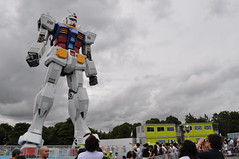
While I was in Odaiba I took the time to go to Miraikan or MeSci as it’s known in English. It’s a museum that is supposed to ‘share’ innovative science. There are a lot of interactive displays, and it’s well set out and very funky, but I was disappointed that there didn’t seem to be that much. I suppose when I think of a science museum with interactive displays I think of basic sciences. There’s not many ways you can have a display of the International Space Station and make it interactive. And driving a robot remotely just isn’t my thing. However, the one exhibit that was really cool was the internet display, designed to show kids how information is sent around the internet. Using black and white balls as bits you try to send a word to another input station, but the balls have to go along all these ramps and through big windy things. Very cool. Overall, even though I found Miraikan to be a bit dull, young kids would like it.

Oh, and I finished off my day in Odaiba by conquering my fear of heights and walking across the Rainbow Bridge. Got some great pictures of Tokyo too, check them out!

For the rest of my vacation I knew money was going to be sparse, so I took up an offer from my company to teach at an English summer camp. The camp was a lot of fun, and really wasn’t very hard work. I got to meet 3 other teachers from my company who were lovely ladies, and my group of kids was friendly and tried hard. I think the most enjoyable part of the camp was the BBQ/bonfire/ghost walk evening. We ate a heap of meat, got to light small fireworks, dance around, and freak out the kids (we were the monsters)(and yes, I am kinda sadistic).

The final part of my vacation was two weeks spent in Australia. Two weeks seems like a long time on paper, but it really flew. I visited my grandfather, aunt, uncle and cousin, and also managed to catch up with a few friends. I went shopping for clothes (I just can’t buy pants/underwear in Japan), multiple doctor/dentist appointments and ate many foods I missed. It was really wonderful to go back home, I’ve been missing it a lot lately. And believe me, it was very sad to leave. It was also very distressing to get my credit card bill (4 days of shopping, and averaging $500 a day… you do the math) but at least I have clothes now.

And now it’s September and it’s back to school. Admittedly it’s only the first week of school, but things have been slow so far. I’m expecting to get slammed next week. But I would have to say the most interesting thing about being back at school is the ‘measures’ the school is taking in regards to Swine Flu… It’s not even flu season yet!?! Regardless, if a kid comes down with a fever during class time, we have to give them a mask, send them to the teacher’s room, and then to the nurse’s office. And on top of that, the school has decided to limit the Culture Festival in a few weeks time. Now, if you’ve ever watched a school-based anime, Culture Festival is when all the kids open a maid café or make a haunted house in their classroom. People from outside the school (family/friends/complete strangers) can come and look around, etc. This year however, the school has limited the festival to one day, no food will be sold, and only families that have returned their RSVP’s can come. I can tell you now a lot of the kids will be disappointed.

But such is life in a society prone to panic.

Did I ever tell you about how natto sold out when a TV show said eating it every day was good for dieting??? Crazy group mentality….

*edit – apparently the swine flu panic isn’t over reacting, at the moment about 12 kids from the school have contracted it…. great….


visiting with the guardian of peace keeping in Japan

27 07 2009

Last weekend was a long weekend, with Monday being Marine day. So with three days off, traveling to a place like Nikko is ideal. Nikko is the home of Toshogu Shrine, the mausoleum of Tokugawa Ieyasu, but also has over 1000 years of Shinto and Buddhist history, beautiful scenery, and hot springs (^-^)v

My friend Reiko and I had planned on going to Nikko for some time. Despite living most of her life in Japan, she had only been to Nikko once. And despite our best intentions, plans weren’t finalized until the day before. Nikko is seriously one of the best places to take a day trip if you are visiting Tokyo. It’s really gorgeous, and has so much natural beauty, history and culture.

If you plan to stay overnight in Nikko, it is best to chose a hotel, pension or ryokan that includes dinner. Not many restaurants are open in the evening. Previously I have stayed at the Turtle Inn, popular with foreign tourists thanks to Lonely Planet, which is a lovely place to stay, however this time Reiko found a pension for us to stay in.  We stayed at L’ESCALE, a charming French restaurant and pension in the Kirifuri Highlands.  I cannot rave enough about this place!

L’ESCALE, as i mentioned, is French themed.  Dinner is a French five course meal, including salad, soup, fish or vegetable dish, main dish, and dessert.  All meals are cooked by the owner and his staff, and it seems to be a family run operation.  The owner speaks some English, so people who don’t speak Japanese should be comfortable.  The rooms are large and comfortable, and the rates are quite reasonable, and include dinner and breakfast.  It is a hike from the station, but you can catch a taxi for less than 800yen.  And it is also within walking distance to the World Heratige site (ie, Toshogu Shrine), and the Nikko Beer factory (which made Reiko very happy).

Unfortunately we had a very late start on Saturday, and didn’t make it to Nikko until late afternoon, so we went directly to the pension and had dinner.  Sunday was a lot more active.  After leaving the pension we walked to the World Heritage site, and along the way we passed a horse riding place, the Nikko Beer factory (where we stopped for a drink), and a fishing place.

Nikko Beer

Nikko Beer

Toshogu Shrine

Toshogu Shrine

Eventually we arrived at Toshogu Shrine, and bought a multipass for 1300yen, which gave us admission into Toshogu, the tomb of Ieyasu, and Honji-do.  Toshogu Shrine is a splendid place.  It has many elaborate carving, beautiful paintings, and gold leaf everywhere!  At the time of rebuilding (originally it was much smaller) it cost billions of yen, and it really shows.

Nikkos Famous Monkeys

Nikko's Famous Monkeys

Within Toshogu one of the first things you’ll notice are the carvings.  ‘Sanzaru’ is probably the most famous carving, and in English is known as ‘Hear no evil, speak no evil, see no evil’.  These three monkeys are one of the first graphical representations of the phase, but on the same building you will also notice a number of other monkey carvings.  In fact all the monkeys represent all stages of life.

Some of the other carvings can be rather strange in appearance.  The artists hadn’t actually seen many of the animals in real life and had to rely on their imaginations.  Opposite the monkeys is a prime example of what an elephant *doesn’t* look like.  But many of the other animals are mythical beasts like dragons and kirin, so I guess we can forgive them.

Nikko Elephants

Nikko Elephants

When entering the tomb of Ieyasu, above head is a small carving of a sleeping cat – ‘nemuri-neko’.  This carving is also very famous with the Japanese, as a symbol of the peace that the Tokugawas bought to Japan.  And then it’s a climb of over 200 steps to get to the tomb.  It can be pretty taxing on a hot and humid day

Ieyasus Tomb

Ieyasu's Tomb

Nemuri-Neko

Nemuri-Neko

Inside the Honji-do the ceiling is painted with a large dragon.  When standing under the dragon’s head if you clap the sound will reverberate, and only in that spot due to the acoustics of the room.  Pretty smart if you ask me.

Its easy to spend most of the day at Toshogu, there is a lot to look at inside and outside the shrine.  When we finally stopped for lunch (pretty late at 3pm), we walked down to the main road to find some Yuba ryori – Tofu skin dishes.  Nikko, as well as Kyoto, is famous for Yuba.  Its kinda plain in taste, but with some soy sauce I think its a yummy and healthy dish.

By the time we finished lunch it was quite late, and in Nikko many places close at 5 or earlier, so we found our way back to the pension to relax before dinner (which was really really good!).

On Monday we went to a glass blowing factory to make our own blown glass tumblers.  I have to admit this was a lot more fun than I thought it would be.  Unfortunately it seems they only speak Japanese at Glass Studio Punty, but the staff really do most of the work in making your creation so its not so hard.  And if you aren’t in Nikko the next day they will send your creation to you by mail.

Making glass tumblers

Making glass tumblers

After overheating in front of the kilns, we made our way to the Tamozawa Imperial Villa Memorial Park.  On the grounds here are buildings that have been used by the Imperial family as a summer villa since 1899.  The actual buildings weren’t all built at the same time, and some were moved to Nikko from other places, but its very interesting to see Meiji era architecture that combines tradition with western styles.  Much of the villa is carpeted, but still very Japanese in design.  And the gardens were also very beautiful.

Tamozawa Imperial Villa

Tamozawa Imperial Villa

Looking outside through a circular window

Looking outside through a circular window

So after spending the afternoon there we had to make our way back to Tokyo and back to ‘real life’.  It was a lovely, relaxing weekend overall!


Of weddings, clouds, and statues

24 07 2009

A couple of  weekends ago (see, I’m already behind…) I was invited to a friend’s second wedding party in Yokohama.

I find Japanese weddings to be very different to what weddings I have attended in Australia. Firstly, in Japan they hold a number of parties. The actual legal wedding occurs at your local ward office, and is really just like going to sign the document. Then you have wedding parties.

Most couples have at least 2 wedding parties. The first being a wedding ceremony and formal reception. The second party is more like a reception, but the couple would have had a “costume” change, and more guests would be invited. The guests have to pay for the party, around the order of ¥5000 or upwards, but this will probably include food and drink. It’s also probable that there will be some sort of game either to get to know the other guests or for prizes. These 2nd parties only last about 2 hours, and then afterwards guests will either head off to the next party, an after party, or home.

Oh, and did I mention, its also customary for guests to wear black or dark colours to a wedding in Japan???  Particularly if you go to the first party.

All in all it must be an exhausting day for the couple, with sooo many events to attend. Personally I do prefer the western style of ceremony and one reception, just seems a whole lot easier to me, because Japanese weddings are such a big production!

Anyway, the party I attended a few weekends ago was a lot of fun, and it was good to see a lot of my old colleagues. Because it was in Yokohama I opted to stay there overnight, it’s about an hour and a half from where I live, and then the following day went out further to Hakone to enjoy some hiking and onsen.

Mikas Wedding Party in Yokohama

Mika's Wedding Party in Yokohama

Alas my Hakone plans were a bit too ambitious for someone who was out late the night before, not to mention the weather wasn’t agreeable either.  Hakone, being in the mountains, is often in the clouds.  On a good day you can see Mt Fuji from Lake Ashi.

Lake Ashi and Mt Fuji

Lake Ashi and Mt Fuji

And on a bad day, well, you can’t see much at all…

Lake Ashi in cloud

Lake Ashi in cloud

On the Monday I wanted to do an 11km walk around Lake Ashi, and then hike back down the mountains to Hakone-Yumoto. I did start the walk around Lake Ashi, but about a third if the way around clouds set in and I decided it was best to turn back. So instead I headed back to my hotel, B&B Pension Hakone. My hotel was a very pleasant surprise, very cheap, but included breakfast and a discount ticket to a nearby onsen (Mori no Yu, part of Yunessun). So that evening I rested my sore muscles in the hot spring.

The next day my plan was to hike from Gora station to Tsukahara station before heading home. But again my exhaustion got the better of me (in the end I did walk over 20km in the two days) and I went to the Hakone Open Air Museum instead.

The museum was very interesting. I had been meaning to go there for a long time and I’m happy to have been now. It’s a museum dedicated to displaying statues outdoors. But for me it was very interesting to learn my own tastes in sculpture. It seems I tend towards shiny things and the human form. And not abstract sculptures, which surprised me because I tend towards more modern artwork.

Anyway, I didn’t take many photos, becuase the signs all said no photos.  But then walking about I saw many people using cameras, so here’s a couple of the sculptures I liked –

Shiny Ball thingy

Shiny Ball thingy

Disembodied Head

Disembodied Head

By the way, for anyone interested in hiking in Hakone, this site is a great resource if you don’t mind wading through the Japanese on their maps – Hakone-Zenzan.  The hikes I was planning to do were #1, #4 (which doesn’t have a map, but from Hakone Machi just keep following the closest road to the lake going left, and you cant miss the trail head), and something in the area of #18. I used the Mapple Hakone hiking map to plan my hikes.  (One day when I actually do the hikes, I’ll do a proper write up…)