Hike – Kamakura Ten-en Hiking Course 天園ハイキングコース

25 01 2010

Meigetsu-in Main Hall

Quick Overview

Another pleasant hike from Kita Kamakura Station 北鎌倉駅 to Kamakura-gu Shrine 鎌倉宮.  There are a few temples of interest along the way, and great views of Kamakura town 鎌倉.  On a clear day you can even see Mount Fuji 富士山.  Unfortunately not well signed, and has many stairs and steep rocky areas.  Probably not for the kids, but easy for most people of average fitness.

If you are interested in this hike, you might also be interested in the Kamakura Daibutsu Hiking Course.

Distance: 7 km
Duration: 2 – 2.5 hours
Difficulty: easy – medium
Season:  Suitable all year (but a bit dangerous when wet – slippery rocks)
Starting point:  Kita Kamakura Station 北鎌倉駅
Finishing point:  Kamakura-gu Shrine 鎌倉宮 

Maps

A map of the hike  can also be viewed at GPSies

There are a number of nice walks in the hills surrounding Kamakura 鎌倉.  The Mapple website has a map of the area that includes the trails – http://map.mapple.net/_mdspot_sc40000_sidG01401136102_lon139.5506925_lat35.3307686111111/index.htm, but is only in Japanese.  The trail head for the Kamakura Daibutsu hiking course is marked by the flag, and all walking trails are marked with a blue dashed line.

The Hike

Meigetsu-in Entrance

From Kita Kamakura Station 北鎌倉駅, take the Enrakuji Temple 円覚寺 exit and turn right.  Only a few meters down the road is Engakuji Temple 円覚寺, the second in Kamakura’s top five Zen temples (admission is 300 yen).  It’s quite an extensive temple, and is also known for its changing leaves in Autumn.  Continue along the road for about 10 minutes and you will see a sign for Meigetsu-in Temple 明月院 (admission is 300 yen).  Take the road to the left, and the temple isn’t far along, it’s just where the road bends.  I can highly recommend this temple, it has a small but lovely garden famous for hydrangeas (June/July), and the main hall has a round window with beautiful views of the garden.

Entrance to Kenchoji

Entrance to Kenchoji

Returning to the main road next to the rail lines, keep headed away from the train station, following the signs to Kenchoji Temple 建長寺 (admission is 300 yen).  Kenchoji 建長寺 is on the left hand side, and to access the trail head you have to enter the temple.  There is another trail head close to Meigetsu-in 明月院 in the residential area behind it, but personally I couldn’t find it.  Within Kenchoji 建長寺 head past the main hall on the left hand side, and you will reach stairs.  Follow these stairs to the top where you will find a temple.  On the right hand side of the temple you can walk a little further up to an observation platform where you can see Kamakura town 鎌倉 and Mount Fuji 富士山 on a clear day.From here the real hike begins.  For the first half of the hike follow the signs to Ten-en 天園 or Zuisenji Temple 瑞泉寺.  You will pass a few small bamboo groves and many Yagura, which are cave tombs from the Kamakura era.  Now, this trail has many unmarked trails leading from it, so it can be a little difficult to navigate.  My advice is to keep going in the same direction, keeping Kamakura town 鎌倉 on the right, and stay to the most used path.  This should get you to Zuisenji 瑞泉寺.

Ten-en Tea House

Ten-en Tea House

Once you reach Mt Ohirayama 大平山, the highest point along the trail, you will see a country club and golf course on the left.  Keep going ahead, and shortly after you will reach the Ten-en Tea House 天園茶屋, where you can buy some lunch or snacks.  To continue on, head past the tea house, and down hill a little, past another house.  Turn to the right and walk through a large bamboo grove before turning left to head to Zuisenji 瑞泉寺.  From now, follow any signs pointing towards Zuisenji 瑞泉寺.

There are a number of alternative paths again from this point, but if you follow the advice of staying to the most travelled paths you should get to Zuisenji 瑞泉寺.  If worse comes to worse, you are only in a small wooded area, and suburbia isn’t far away if you take a wrong turn.

Entrance to Zuisenji

Entrance to Zuisenji

The end of the trail is a small staircase with a map at the bottom, and then the street.  Take a right, and then another right to get to Zuisenji 瑞泉寺 (admission is 300 yen).  Zuisenji 瑞泉寺 is famous for its caves that overlook a pond (see my header picture).  It also has lovely narcissus (January), plum (Febuary), and hydrangeas (June/July).When leaving Zuisenji 瑞泉寺 keep following the road ahead.  It will eventually turn right, and on this corner is Kamakura-gu Shrine 鎌倉宮 (admission to the grounds free, Treasure house 300 yen).  A little bit further around the corner from the main gate is the bus stop for the bus back to Kamakura Station 鎌倉駅 (Bus #20).

To and From

As always, the following routes are just recommendations.  Please use Hyperdia or Jorudan’s Train Route Finder to find the most suitable route for you!

From Tokyo 東京, catch the JR Yokosuka line 横須賀線 to Kita Kamakura 北鎌倉駅.  It takes 50 minutes and costs 780yen.  Or from Shinjuku 新宿 you can catch the JR Shonan Shinjuku line 湘南新宿線 to Kita Kamakura 北鎌倉駅.  It takes 52 minutes and costs 890yen.  Trains run regularly on these lines.  Sometimes a train won’t take you the whole distance and you might need to change to go further on.

From Kamakura-gu Shrine 鎌倉宮 #20 buses leave regularly Kamakura Station 鎌倉駅 for 190yen.  Or you can walk back to the station in about 45 minutes.

Links

Kamakura Today  http://www.kamakuratoday.com/e/index.html an English site with information on the sites in Kamakura

Mapple Map of Kamakura in Japanese http://map.mapple.net/_mdspot_sc40000_sidG01401136102_lon139.5506925_lat35.3307686111111/index.htm

Map of hike on GPSies http://www.gpsies.com/map.do?fileId=krlwluqtzmqdquny

My photo set on Flickr http://www.flickr.com/photos/michelelisa/sets/72157623260903464/

Useful Kanji

Kamakura 鎌倉
Ten-en Hiking Course 天園ハイキングコース
Kita Kamakura Station 北鎌倉駅
Kamakura-gu Shrine 鎌倉宮
Mount Fuji 富士山
Enrakuji Temple 円覚寺
Meigetsu-in Temple 明月院
Kenchoji Temple 建長寺
Ten-en 天園
Zuisenji Temple 瑞泉寺
Mt Ohirayama 大平山
Ten-en Tea House 天園茶屋
Kamakura Station 鎌倉駅
Tokyo 東京
Yokosuka line 横須賀線
Shinjuku 新宿
Shonan Shinjuku line 湘南新宿線
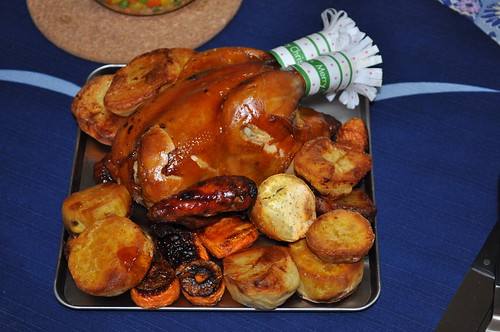


and so this is Christmas~

20 01 2010

About a month late…  but…  well…  anyway….

So with my parental units here for Christmas, my mother’s one wish was to have a ‘white one’.  And with that in mind, we planned to go to Yuzawa Onsen in Niigata.

Since we were away for Christmas Day, we had our family lunch of roast chicken on the Tuesday.  My local supermarket carried whole chickens this year, so it really was a proper christmas lunch

with pudding (^-^)b

The recipe for this pud is from Video Jug, and I highly recommend it.  Everyone (work mates too) said it was delish!

In the evening we went to the illumination at Tobu Zoo (because what’s Christmas in Japan without an illumination?).

The theme was ‘Four Seasons’ but really, they only focused on the cherry blossoms for spring (>_<).

Wednesday, Thursday and Friday were spent at the snow.  We had a good package, and despite none of us being able to ski or snowboard we had a good time.  Well, at least it was amusing for my parents to watch me fall down *trying* to snowboard…

To check out some more photos please head over to my flickr page!


Kyushu Photo Blog

5 01 2010

My apologies for the irregular postings over the last few months.  Between the parental unit invasion and travel I’ve hardly been on the internet.  But I finally got around to sorting out my photos from Kyushu, and without further ado, here’s the photographic evidence. (warning, very image heavy!)

Day one in Nagasaki:

Oura Catholic Church, which is Japan’s oldest standing wooden church.

Glover Garden, a garden that is the home to 7 western style residences from the Meiji period.

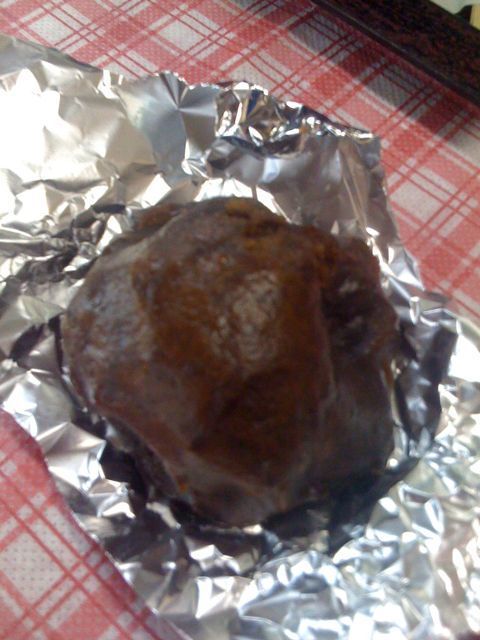
Kakuni Manju, BBQ pork in a steamed bun.  Very very yummy!

Dejima is the island where Dutch traders were allowed to trade with the Japanese during the Tokugawa period.  Due to the Shogun closing Japan to westerners, Dejima was built to allow trade with the Dutch to continue.  Over the years the island was lost to reclaimed land, but recently the island and the buildings have been restored.  I found Dejima to be really fascinating.

Saru Udon

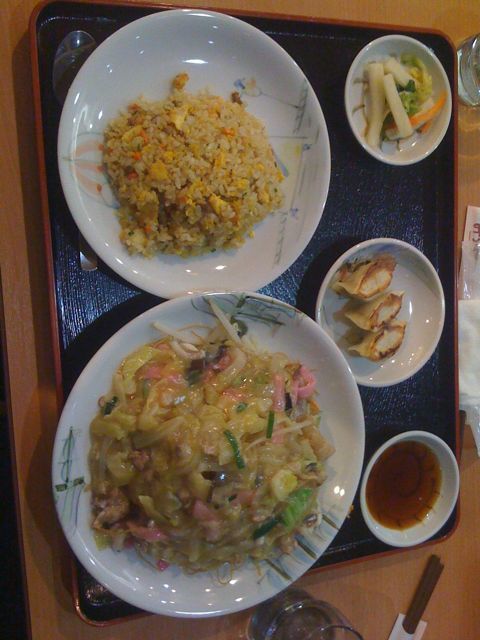
Champon, a Nagasaki speciality, is a cross between Japanese and Chinese food.  Many of the dishes in Kyushu have Chinese influences.

Day Two in Nagasaki:

A visit to the Peace Park, which is just up the road from the hypocenter of the atomic bomb blast.

Here is the monument (on the right) which marks the hypocenter, and a piece of the Urakami Cathedral that survived the bomb blast.  The Atomic bomb museum is only a short walk from here, and really, I can’t use words to describe it.  Going to a museum like this is one of the most sobering and somber experiences you can have.  If you have the chance, go!

Another relic of the bomb blast, the other half of this Torii gate was knocked down by the explosion.

Kitties!

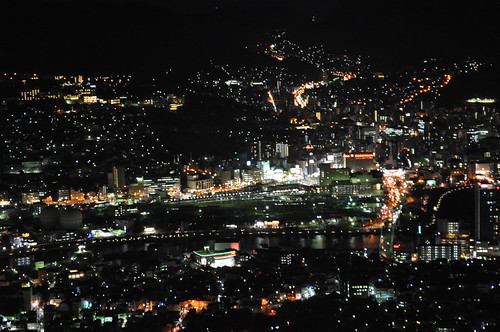
Nagasaki City night view, said to be one of the three best in Japan.  Here you can see Nagasaki Station in the center of the picture.

Day 3 from Nagasaki to Kumamoto via Shimabara:

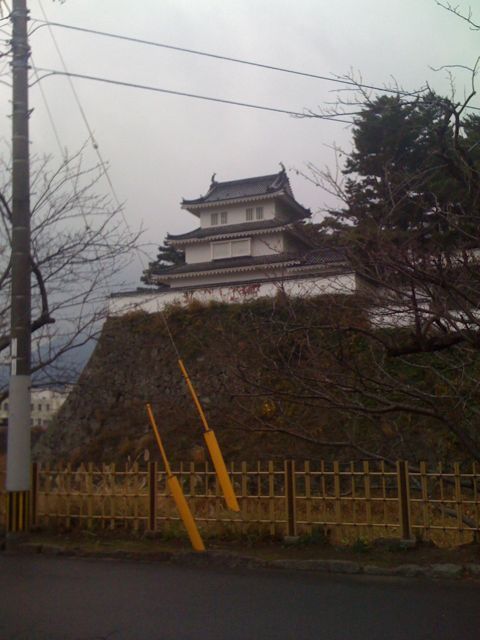
We caught the train from Nagasaki to Shimabara this day, and had a quick look around Shimabara Castle.  Shimabara is the peninsula where many Japanese Christians were killed in a revolt, and the castle had many relics of hidden Christians in the area on display.  However, the castle was nothing compared to the one at Kumamoto, so I won’t post any photos apart from this –

A Shimabara food, Rokobe Manju, a black steamed bun with sweet potato inside.

After that we went to the ferry and were in Kumamoto by sundown.

Day 4 in Kumamoto:

We started out by going to Kumamoto Castle, which was built by Kato Kiyomasa (above).

A castle turret with the walls of Nimaru and Honmaru (inner and second circle of the grounds).

A close up of the stone walls.

The main tower of the castle.

View from the main tower, looking at the reconstructed palace.

The guided meeting room of the lord of the castle (inside the palace).

Although a lot of the building are reconstructed, there are a few originals, and plenty to see.  We literally spent all morning there, and didn’t even realize we had missed lunch!

Next off to Suizenji Jojuen garden, which was first started in 1632, and depicts the 53 stations of the old Tokaido highway.  You can even see a miniature Mt Fuji.

Dinner that night was Kumamoto ramen.

Firstly Tonkotsu ramen.

Then a salt flavored broth.

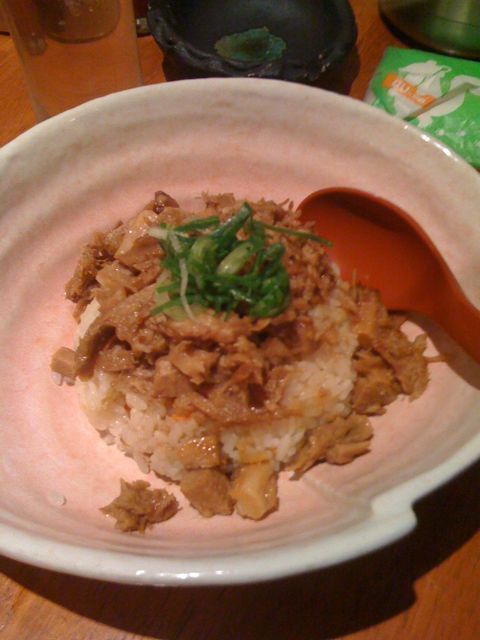
And finally a Chinese style simmered pork on rice.  All very very yum!

Day 5 in Kumamoto:

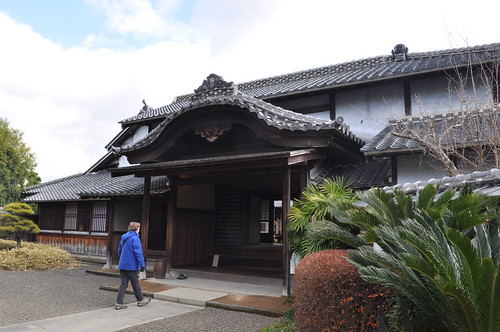
We wanted to make a day trip to Aso, but unfortunately the weather didn’t agree with us, and instead we went to the Former residence of Hosokawa Gyobu, a Samurai house.

Mum and Dad found it really interesting because they had never been into a Samurai house like this.  There were quite surprised at how big it was.

Day 6 returning home:

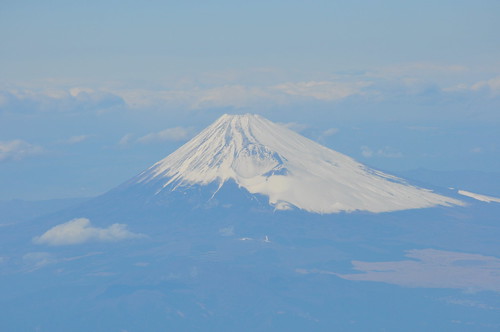
Finally, on the plane home we were able to see Mt Fuji, and final treat to the holiday.

To see some more photos, please check out my Flickr set!


Photos from Kyushu

4 01 2010
The main tower

The main tower,
originally uploaded by michelelisa.

You can check out my photos from Nagasaki and Kumamoto on flickr now, or wait until tomorrow when I’ll do a proper photo blog (^-^)v


Kyushu day 4- Kumamoto day 1

18 12 2009

Today was our first day in Kumamoto. After eating breakfast at the hotel we set off to explore the Kumamoto castle grounds. The complex is actually quite extensive and includes a number of original stone walls, a few original buildings, and a few replicas. The main donjon is a replica, but looks spectacular, and the replica palace in the honmaru was gorgeous. All in all, it was really intresting, and we spent over 4 hours there before we even realised.
Next it was across town to Suienji Garden. This garden was built in the 1600’s, and simulates the Tokaido highway from Tokyo to Kyoto. It even had a minature Mt Fuji. It was very pretty, and mum was particular happy.
We ended the day with some Kyushu ramen (pictured below). Kyushu is famous for it’s tonkotsu ramen, which is my favourite, so I was really happy. We had one tonkotsu ramen, one salt flavored, and one meat and rice dish. Overall a rich meal, but really tasty!


Kyushu day 3- Nagasaki to Kumamoto via Shimabara

17 12 2009

So today we travelled from Nagasaki to Kumamoto. There are a few different ways to make this trip, but we decided to catch the train to Shimabara so we could see the castle there (there’s a picture below). The Shimabara castle isn’t the original, but contained some interesting displays on Christians in Kyushu and the local fedual families.
At the castle we stopped for lunch and I had a style of udon I had never seen before – maruten udon (pictured below). It was yummy, but as my mother commented, it was kinda like seafood extender. We also tried Rokube manju, a black steamed cake with sweet potato inside. It’s a Shimabara speciality and was quite yummy.
After the castle we had to catch a ferry to Kumamoto, where we will spend the rest of the trip. It doesn’t sound like we did much today, but we did spent over 3 hours travelling.
Hopefully we will have good weather for the last couple of days, but it seems we have the threat of snow. Fingers
crossed that if it does snow it won’t interfer with our plans!


Kyushu- Nagasaki day 2

16 12 2009

Oh I’m so tired! you are lucky to get a blog update today!
Okay, anyway, Nagasaki day 2! Today was a little slower, and certainly more introspective (not sure if that’s quite the right word…). We started the day out by catching a train to Urakami and the Peace Park. This park is built to commemorate peace and has a large statue to represent atomic weapons, peace and prayers for the victims of the atomic bomb blast. Down the road from here is also the epicentre of where the atomic bomb over Nagasaki exploded. And then right next to that was the Atomic Bomb Museum. Words really can’t describe what these places are like. It’s amazing that so much distruction occurred there, and yet now they are healthy clean places. And being able to see the affects of the bomb, walk around the few exsisting ruins. It’s a very sombering experience. Sad, but if you do ever go to Hiroshima or Nagasaki, the atomic bomb museums are a must visit.
We then walked a little further to the one legged Torii gate which is pictured below. The other half of the gate was blasted down by the bomb, while this half remains standing. Quite surreal really.
After having some lunch (no remarkable foods today) we went to some temples, and then back to our hotel. This was to rug up as just before dusk we caught the rope way up Mt Inasa to see the view of Nagasaki. Nagasaki is said to have one of the top three night views in Japan. You can also see a picture below. We have been to Hakodate (another one) and although Nagasaki doesn’t have such a nice shape as there, the city was quite clear and beautiful.
Tomorrow we will be travelling to our next city, so goodbye to Nagasaki!


Kyushu day 1- Nagasaki

15 12 2009

Well, I’ve been a little lax with updates these last couple of weeks, but with good reason! School exams have been happening, the JLPT was on the 6th, and my parents have come for a visit! Right now we are holidaying in Kyushu, where it’s surprisingly colder than Tokyo!
So our Kyushu trip has started in Nagasaki, home of Champon, Plate Udon, and Castella, to name a few food items. Today we went to Glover Garden, which is the site of a former residence of a foreign businessman. The gardens have been expanded and a number of other historically significant western style buildings have been moved there. It was very beautiful and reminded me of English gardens. Nearby is the Oura Catholic Church, the oldest Catholic church in Japan.
From there we walked to Dejima, the site of the former Dutch settlement. This tiny island was the only official contact Japan had with the western world during it’s isolation period. The original island and buildings had been lost due to land reclaimation and construction, but the reconstruction of the site is really well done. The best word I can find to describe it was fascinating. Quite a mix of Japan and the west.
Next it was a walk along the local shopping arcade and a quick look at Sofukuji Temple, a temple built in Ming dynasty style. It has surprised me how much Chinese infulence there is in Nagasaki. Not only is there a Chinatown, but it also appears that they have dragon dances quite like lion dances. And there are Chinese style restaurants everywhere!
Which brings me to food. Nagasaki is famous for Champon, a ramen soup dish with very salty broth, lots of cabbage, and mixed seafood. The other dish it’s famous for is Plate Udon, which is dried noodles with cabbage, seafood and sauce served on top. Both are very yummy! I’ve tried to attach photos, but as I’m doing this from my phone I don’t know how successful I’ll be.
The other things we tried today were Castella, a sponge cake with a slight sweet cheese flavour, and a type of manju (of which the name escapes me). The manju is unusual as it’s savoury not sweet. Instead of bean paste in a steamed bread bun is was a very juicy, tender, fatty piece of pork. Oh it was yummy!
Okay, that’s all for tonight, more adventures (and food) tomorrow!


Hike – Ashinoko (Hakone) 芦ノ湖(箱根)

6 12 2009

Quick Overview

Lake Ashi

This is a pleasant (if long) walk around Lake Ashi (Ashinoko) 芦ノ湖.  With views of Mt Fuji 富士山, and access to transport to many other sightseeing places in the area, it’s quiet scenic.  The trail is mostly flat and well-defined and signed.  Usually very quite, as most tourists use the boats to cross the lake, but a good option if the weather is fine and you have the time.  Suitable for anybody who can walk long distances.  Also has a few beaches along the way to stop at and have a picnic lunch (but no shops or toilets).

Distance: 12km
Duration:  3 to 4 hours
Difficulty: easy
Season:  April to December
Starting point:  Hakone Machi 箱根町
Finishing point: Togendai 桃源台

Maps


Note, the last few kilometers of this trail won’t show on the embedded map, but you can access the whole map on googlemaps!

A full map of the hike  can also be viewed at GPSies

The Mapple 山と高原地図 map series number 29, which includes Hakone 箱根 and it’s surrounds, can be bought on Amazon.co.jp. Note, these maps are in Japanese, but have some English and furigana.

The Hike

From the bus stop at Hakone Machi 箱根町 follow the edge of the lake around to the left.  You will have to walk along a couple of streets, but as long as you stick to the route closest to the lake edge you will be able to pick up the trail.

Initially you will walk on a service road around a small mountain.  There are a number of different short trails on the mountain if you want to do some extra exploring.  If you keep to the service road you will come to a picnic area with some public toilets and a large gate.  This is the last toilet until the end of the walk.  Next to the  gate is a smaller gateway for people. Just pass through that and you will be on the path to Togendai 桃源台.

The path follows the edge of the lake, and the only deviations are little paths that lead down to the lake edge.  Occasionally you will be able to access a stone beach next to the lake, so bringing a picnic lunch and something to sit on is a pleasant way to spend some time.

Towards the end of the hike you will join a bitumen road nearby a flood gate and boat ramp.   Here, again, stick to the path closest to the lake’s edge.  After a kilometer or so, you will come to a large river crossing the path.  You will have to cross the river on the main road.  On the other side  of the river is a large camp ground.  Follow the road around the camp ground, and keep going until you reach Togendai Ropeway station 桃源台ロープウェイ駅.

To and From

As always, the following routes are just recommendations.  Please use Hyperdia or Jorudan’s Train Route Finder to find the most suitable route for you!

From Tokyo 東京, you can either catch the JR line or the Odakyu 小田急 line.  The JR Tokaido line 東海道線 leaves from Tokyo Station 東京駅, and takes 86 minutes and 1,450 yen.  Or you can catch the Kodama Shinkansen to Odawara 小田原 from Tokyo Station 東京駅, costing 3,640 yen and taking 36 minutes.  The Odakyu 小田急 line leaves from Shinjuku Station 新宿駅 and goes to Hakone Yumoto Station 箱根湯本駅.  You may have to change at Odawara 小田原 to continue further on.  The Odakyu 小田急 line either costs 1,150 yen and takes approximately 110 minutes, or if you catch the Romance Car (reserved seating) takes 89 minutes and 2,020 yen.
From Odawara 小田原 or Hakone Yumoto 箱根湯本 catch the Odakyu 小田急 bus to Hakone Machi 箱根町.  From Odawara 小田原 this takes about 60 minutes and 1,150 yen.  From Hakone Yumoto 箱根湯本 it takes 45 minutes and 790 yen.

Departing from Togendai 桃源台 you have a few options.  There is a bus back to Hakone Yumoto 箱根湯本 and Odawara 小田原 taking 45 or 60 minutes respectively, and 840 or 1,200 yen respectively.  Or you can take the scenic route over Owakudani 大涌谷 by catching the Ropeway.  The other option is to catch the boat back to Hakone Machi 箱根町 or Moto Hakone 元箱根, and then catch the bus from there.

If you are staying in the Hakone 箱根 area for a few days Odakyu 小田急 has a Hakone Freepass, which covers return trip from Shinjuku 新宿, and many of the other forms of transport around the area.  The 2 day pass is 5,000 yen, and the 3 day pass is 5,500 yen.  Details can be found here.

Links

Odakyu Hakone Freepass – http://www.odakyu.jp/english/freepass/hakone_01.html

Hakone Zenzan, some other hikes in the Hakone area and weather reports- http://www.hakone.or.jp/english/osusume/hike_list.html

HakoneNavi, tourist information site for Hakone – http://www.hakonenavi.jp/english/


Useful Kanji

Lake Ashi (Ashinoko) 芦ノ湖
Hakone 箱根
Hakone Machi 箱根町
Hakone Yumoto 箱根湯本
Hakone Yumoto Station 箱根湯本駅
Moto Hakone 元箱根
Mt Fuji 富士山
Odakyu 小田急
Odawara 小田原
Owakudani 大涌谷
Shinjuku Station 新宿駅
Togendai 桃源台
Togendai Ropeway station 桃源台ロープウェイ駅
Tokaido line 東海道線
Tokyo 東京
Tokyo Station 東京駅


Iruma Base Airshow

27 11 2009

I went with a friend and his daughter to the Airshow at Iruma Base earlier this month, and I finally got around to uploading the best photos I took.  It was my first airshow with my digital SLR, so, my shots aren’t the best.  I found it pretty challenging to center the photos while the zoom was up close (and the planes were moving so fast).

Anyway, here are a few of my favourites –

Obligatory cargo plane… I love cargo planes, but i just don’t have the patience to memorize anything about them.  I just think they look cool.

The big display of the day was Blue Impulse – the Japanese Self Defence Force’s precision flying team-

It was a beautiful blue day wasn’t it?  If you want to check out some more of my photos, head over to my Flickr set.