Yozakura 夜桜

14 08 2010
Sakura and Paper Lantern

Sakura and Paper Lantern

Sakura 桜 (Cherry Blossom) are beautiful no matter what time of day you view them, but there are a number of places in and around Tokyo that also have night ‘Illuminations’ of the blossoms.

There is even a special word for cherry blossoms in the evening – Yozakura 夜桜 (literally ‘night cherry blossoms’).  The illuminations range from the whole trees being spotlighted, to the more traditional, with lanterns hanging amongst the branches.

Toshimaen, Tokyo

Toshimaen Sakura Illumination

Toshimaen Sakura Illumination

Toshimaen is an ‘old school’ amusement park in Nerima with whole tree spotlights.  Normally there is an entrance fee to the park, but during the Sakura season, entrance from about 4pm becomes free for the night-time illumination.  In fact, inside and out of the park are a lot of Sakura trees, and the area is quite beautiful in spring (but then, I might be bias, I used to live there).

Kita Koshigaya

Lanterns and path

Lanterns and path

Sakura at Dusk

Sakura at Dusk

These photos are taken at Kita Koshigaya, a place I mentioned in my last Sakura post, from dusk to darkness.  Kita Koshigaya’s Illumination is more of the traditional kind, with paper lanterns.  You might notice on each lantern something different is written, these are the names of the people or the company that ‘sponsors’ the lantern.  It’s quite pretty, but also very hard to photo (especially on a windy evening)!

Blossoms in the dark

Blossoms in the dark

To see these photos in full, or see a few more not shown here, please check out my flickr set! Enjoy the flowers!


of anniversaries and resolutions

7 08 2010

Almost a month ago, without any fanfare (or baking for that matter), yamaonna had its first anniversary.  And on this occasion I would like to take a time out to look at my first post Happy New Blog, and in particular, the resolutions I made.

  • Firstly, ‘Write once a week’.  I’d say I have been successful at this.  Although I might not have written every week, I have written the equivalent of once a week.
  • Secondly, ‘Write interesting entries’ (in order to improve my writing).  I can’t say that my writing has improved, but I think I have learnt to focus on methods that make my writing more readable.  Like breaking things down into bulleted lists.
  • Next, ‘Include multimedia, photos, videos, etc’.  Check.
  • ‘Write entries for hikes, walks, flower information, etc…’. Check again 😀 9 hikes already written up, more to come.  A few flower and gardens pages also complete, but there is, as always, more planned.
  • And lastly, ‘I suppose I should write it in Japanese’.  Weeeeeelllll..  This one hasn’t happened.

Overall, 4 out of 5 isn’t bad.  However, it makes me think, what should I try to achieve with my next year of yamaonna?  Apart from continuing on my ‘successes’ to date, I think that dropping the ‘write in Japanese’ resolution is probably for the best.  I’m just too shy to share my bad Japanese with people who know me.

But what does that leave me with to aim for?  Well, I still want to continue writing about hikes, flowers, and gardens.  And maybe, just maybe, I might try my hand at some social commentary (oh won’t that be fun kids?).  But above all else, from now on expect regular updates.

Yamaonna will be updated every Saturday between 5 and 10 pm AEST.  The first, third, and fifth (if there is a fifth) Saturdays will be posts about life in general.  The second Saturday will be posts about flowers and gardens.  And the fourth Saturday will be posts of hiking guides.

I hope you will enjoy!


10 Rules of Tech-etiquette (via Geoffrey Webb)

6 08 2010

So true in this day and age. Rules everyone should stick to!

10 Rules of Tech-etiquette I had the privilege of being ignored the other day. I walked into a firm's reception area to find the receptionist talking into her headset and rustling through papers. No problem, I thought. I'm early for my appointment, I'll just wait. She said her goodbyes and immediately switched to typing furiously into her computer. I've been there, I thought. She just finished with that call and has to record something before she forgets it. So I waited. A … Read More

via Geoffrey Webb


D-Days for yamaonna

3 08 2010

Okay, so I’m having a little trouble writing this post.  This is the 4th or 5th time I’ve started to write it, and it hasn’t turned out right yet.  So, I’m going to stop trying to use fancy words and just come out with it…

I stayed at the TOKYO DISNEYLAND HOTEL!!!!!  Wheeeeee!!!!! (cue orchestra and walking broomsticks….)

So, what’s the big deal about that?  Well, not only is it the chance to stay at a beautiful, glamorous, first class (in my opinion anyway) hotel….

But, it was totally themed for Disney!

Disney!

DISNEY!

From the lobby –

To the carpet –

The room –

And even the bathroom!

I was in heaven.

Wanna see how much more a hotel can be Disney-fied?  Check out my other photos on flickr!

(yes, I know…  I can be a little Disney crazy…  But I had been dreaming of staying in a Disney Hotel since I was about 10, so please give me a break)


GUNDAM IS BACK! (now with beam sabre!!!)

29 07 2010

Yes, that’s right!  The life-sized Gundam statue that was protecting Tokyo last summer has been resurrected, this time in Higashi Shizuoka, for the Shizuoka Hobby Fair.  Entrance to the Fair is free, and so is the entrance to the Gundam zone, where you can walk underneath the Gundam.  There is also a Plastic Model Museum (fee 600 yen for adults), and plenty of food stalls.

It now even holds a Beam Sabre, unfortunately though, it is not self-lit, and only a projected light lights it in the evening illumination of the statue (from 5pm).  However the Gundam still has a short period every half hour when it flashes internal lights and moves its head, and the statue also emits steam once an hour with the light show.

For more Gundam!photoporn please check out my flickr set (60 photos, of dubious quality…).

The Shizuoka Hobby Fair runs at the above location from July 24th, 2010 until March 27th 2011.


sugary, flowery, photo!spam

13 07 2010

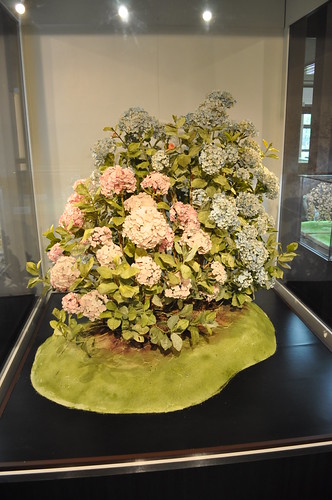
As I mentioned in my ‘good ‘cherry’ hunting’ post, the Japanese sweet factory Kikyoya that we visited has a very impressive museum of sugar flowers.  Now, to be honest, I’m not sure if these were all made by hand, or if they are all made of sugar, but I’m positive they would have to have been put together by hand and would have taken a long time to make.

So, firstly we have some purple and white flowers –

and a close up –

isn’t the detail amazing?

Irises –

Bamboo shoots –

Gourds –

A hydrangea bush –

and a close up of the hydrangeas –

Imagine sticking all those flowers together!!!

And lastly, probably my favourite, autumn leaves –

although this next close up isn’t from the tree above, it’s kinda similar, being an omikuji (fortune) tied to a branch of autumn leaves –

Of course this is only a few of the photos I’ve taken, so if you’d like to see more please head on over to my flickr set!  It includes fish, cosmos, lilies, snow covered grass, wisteria, cherry blossoms and more!


*ahem*

12 07 2010

Attention please!

RHUBARB ICE-CREAM WIN!!!!!!

that is all….


good ‘cherry’ hunting

5 07 2010

Sorry I haven’t updated in a while!  It’s been busy to say the least!  So much as been happening lately, between parties, meeting old friends, work, and the Japanese Language Proficiency Test (yesterday), I haven’t had much time for myself lately.  But I did manage to take some time out a few weeks ago to go on a Hato Bus tour “Hunting for cherries”.

One of the things I love (and hate) about Japan is the difference in the seasons.  And one thing that changes with the seasons is the fruit that is available.  For example, in winter I live on mikan.  But in June, my absolute favourite fruit becomes available – the Japanese Cherry.  There are a few varieties of Japanese Cherries, and, in general, they are pinker and lighter in color than most cherries available in Australia, and are also much sweeter, although there are some slightly sour varieties.

A couple of prefectures in Japan are famous for their cherries, namely Yamagata and Yamanashi.  Having tasted both, I highly recommend Yamagata cherries, but at about 600 or 700 yen for 200g, they are quite expensive.  Another option to get your fill is to go to a farm that offers an ‘all you can eat, pick them yourself’ deal.  Usually you are able to walk around an orchard for about 30 or 40 minutes, and pick (or ‘hunt for’) as many cherries as you like to eat right there for about 1000 to 2000 yen.  And trust me, you can eat a lot in that time…  However, if you want to take some home you have to buy them separately.

As I don’t have a car, the easiest way for me to do this was to go on a tour.  My friend and I went on a Hato bus tour, that not only included cherry picking, but also a visit to Mt Fuji, a buffet lunch, and a brief stop at a Japanese sweets factory called Kikyoya.  The cost was about 9,500 yen, but it really was worth it as it was a full day – almost 13 hours!

We were really lucky with Mt Fuji, because despite being June and cloudy we were able to see the whole mountain.  Actually, when I booked the tour, I didn’t check what the extra activities apart from lunch and cherry picking were, so I wasn’t prepared for this stop.  The 5th station is about 2300m above sea level so it’s much cooler.  On that day it was 10 deg C and raining, and even though I had bought an umbrella, I neglected to bring a jacket.

After that it was on to lunch at the Fuji View Hotel.  It’s owned by a fairly famous hotel chain, and actually had John Lennon stay there once, but their lunch buffet was pretty standard.  There was one thing on the menu that is a Yamanashi original dish – Houtou.  Basically a miso soup with flat udon noodles and a pumpkin flavor.  It was really yummy, and I’m looking forward to trying to make it myself once it gets cooler again.

Next it was off to the Japanese sweets factory, where we were taught how to wrap Shingen-mochi.  Kikyoya is also the home of a very impressive display of sugar flowers, animals and trees.  There were so many different displays that I’ll be doing a separate photo!spam post later this week.  But here’s a sneak peek…

And lastly, the cherry picking.  Normally I’m actually quite nervous climbing up ladders, but apparently when there are cherries at the top I have no problems.  On top of stuffing my self stupid at the cherry orchard, I also bought about a kilo of cherries to make sakuranbou-shu (expect a video of that adventure in about 6 months once it’s finished…  stewing?).

And of course, what’s being a tourist without some shopping!

As always more photos are on flickr, and a post about the sweets with also appear later this week!


Hike – Mt Hinokiboramaru (Tanzawa) 檜洞丸 (丹沢)

20 06 2010

Quick Overview

Hinokiboramaru

Hinokiboramaru

A well signed (albeit mainly in Japanese) hike through the Tanzawa 丹沢 mountain range. Quite steep and slippery in places, and also quite long, this hike is worth it for the beautiful azaleas near the peak of Hinokiboramaru 檜洞丸 (mid-May to June), waterfalls and beech tree forests.  Just make sure you start early in the day to make the last bus, or there are many places to camp and mountain huts nearby, so staying overnight and doing more exploring in the area is an option.  During the winter and spring there are also views of Mt Fuji 富士山.

Distance: 11km
Duration:  7 to 8 hours
Difficulty: medium (slippery and steep in places, also quite long)
Season:  Suitable all year, maybe a little snow in winter months
Starting point:  Nishi Tanzawa Shizen Kyoshitsu Bus Stop 西丹沢自然教室バス停
Finishing point:  Houkizawakoenbashi Bus Stop 箒沢公園橋バス停

Maps

A full map of the hike  can also be viewed at GPSies

There are many different and interesting hikes in this area, so I recommend you buy a map.  The Mapple 山と高原地図 series number 28 map is of the Tanzawa 丹沢 region, and is available on Amazon.co.jp.  Note, this map is in Japanese, but does include some English and furigana.

The Hike

Start of the trail

Start of the trail

You’ll start this hike from the final bus stop on the line, Nishi Tanzawa Shizen Kyoshitsu Bus Stop 西丹沢自然教室バス停.  At the bus stop there is the Nishi Tanzawa Shizen Kyoshitsu 西丹沢自然教室 (Nature Classroom), where you should leave your name, contact details and blood type, for emergencies whist on the trail.  They also display up to date trail information, and the last bathroom before Hinokiboramaru 檜洞丸 is here.

Once you have finished at the Shizen Kyoshitsu 自然教室, continue walking up the road from the bus stop.  You will soon cross a bridge over a river, and see signs pointing to a camp site.  After about 10 minutes you will see a small creek on the right, and a sign pointing to Hinokiboramaru 檜洞丸.  Walk up the creek for 50 meters, and on your left will be some stairs.  These stairs lead to the start of the trail.  The first 20 minutes or so will be uphill, but after that the trail will level out until you reach Gorazawadeai ゴーラ沢出合.  It should take 60 minutes from the trail head to Gorazawadeai ゴーラ沢出合.

Gorazawadeai

Gorazawadeai

Gorazawadeai ゴーラ沢出合 is a river crossing, but the river is small, and not deep.  It’s mostly a rocky riverbed, with some man-made waterfalls nearby.  Cross the river and follow on its right hand side until you reach some stairs.  Once again climb the stairs to return to the trail.  Shortly after Gorazawadeai ゴーラ沢出合 there is a bench if you want to stop and rest.  From Gorazawadeai ゴーラ沢出合 you have entered the ‘New Azalea Road’ つつじ新道, and the trail will become steep.

After another 60 minutes you will reach another bench and a viewpoint at Tenboenchi 展望園地.  From here it’s another hour until the next intersection, and the trail becomes steeper still.  However, you will start to see more mountain azaleas along the way.  At the intersection take the path to the left up, signed Hinokiboramaru 檜洞丸.

This section of the trail is boarded (see the picture next to ‘Quick Overview’), and is a nice easy climb that should only take 10 to 20 minutes.  It is also quite pretty, with some old gnarled and mossy trees.  Not far before the summit you will pass some solar panels on the right.

Mountain Azalea

Mountain Azalea

At the summit of Hinokiboramaru 檜洞丸 there is a marker, small stone shrine, and a couple of benches.  You can also head down the trail on the opposite side of the summit if you want to use the toilet at the mountain hut.  It’s only 5 minutes, and they ask you pay a tip of 50 yen to use the facilities (don’t forget tissues either!).  The mountain hut also sells a very small selection of food and drink, but it’s a little expensive.

To start down, return along the boarded walk to the intersection, and take the other trail marked for Hokisawa 箒沢.  There are a couple of intersections along this trail, but if you take the trail to the right each time you will be headed to Hokisawakoen 箒沢公園.

The first part of the decent is fairly easy, and goes through a nice beech tree forest.  You will pass another trail to Dougakuyama 同角山 after 10 minutes, and then shortly a bench, before climbing a little to the peak of Teshironoatama テシロノ頭.  Continuing down hill you will pass another bench before seeing a very large old moss-covered tree (see below).  Not long after this is the second alternative trail, but again keep to the right towards Hokisawa 箒沢.  It should have taken about 60 minutes to this intersection from the one before.

Beech Tree forest

Beech Tree forest

From now the trail becomes much steeper, despite climbing another couple of peaks, Yabusawanoatama ヤブ沢ノ頭 followed by Itagoyasawanoatama 板小屋沢ノ頭.  There will be sections with ropes to help you down, and some slippery sections without.

From the last intersection it should take about 90 minutes to reach another river, which you will follow on the right hand side for most of the rest of the hike.  The final 20 minutes along side the river is much easier than the last few hours, but still there are some slippery places and stairs to climb up and down.  Just keep the river on your left for about 15 minutes, until you reach a river crossing.  Cross the river, and following it until you can cross back over again.  Only a little further along the trail you will find the Oishi Camping ground 大石キャンプ場, which has a number of cabins as well.

Cross the bridge in front of the camping ground to reach the main road, turn right and the Houkizawakoenbashi Bus Stop 箒沢公園橋バス停 is only a few meters up the road.

To and From

As always, the following routes are just recommendations.  Please use Hyperdia or Jorudan’s Train Route Finder to find the most suitable route for you!

From Shinjuku Station 新宿駅 take the Odakyu Line 小田急線 express 急行 headed to Odawara and jump off at Shin Matsuda 新松田, 84 minutes and 750 yen.  A line map of the Odakyu lines 小田急線 can be found here (in English).  Take the North exit 北口, and then catch the Fujikyu bus 富士急バス from Stop 1 to Nishi Tanzawa Shizen Kyoshitsu 西丹沢自然教室, 1150 yen and 70 minutes.  A timetable of the Fujikyu Bus 富士急バス can be found here for Saturday, and here for Sunday (only Japanese).

On the return, catch the bus back to Shin Matsuda 新松田 from Houkizawakoenbashi Bus Stop 箒沢公園橋バス停, 60 minutes and 1050yen.  Then catch the express back to Shinjuku 新宿 on the Odakyu line 小田急線, 84 minutes and 750 yen.

Links

Fujikyu Bus Schedule for Saturdays http://www.fujikyu.co.jp/syonan/rosen_time/time01_s.html

Fujikyu Bus Schedule for Sunday http://www.fujikyu.co.jp/syonan/rosen_time/time01_h.html

Odakyu Rail Map http://www.odakyu.jp/english/route/railmap/index.html

My Flickr photo set from Mt Hinokiboramaru http://www.flickr.com/photos/michelelisa/sets/72157624111661525/

Photos from another member of the group I hiked with http://www.m-miyata.jp/yama/Hinokiboramaru1006.html

Map of hike on GPSies http://www.gpsies.com/map.do?fileId=kmnhlwuwyoyogyxp

Useful Kanji

Tanzawa 丹沢
Hinokiboramaru 檜洞丸
Mt Fuji 富士山
Nishi Tanzawa Shizen Kyoshitsu 西丹沢自然教室
Nishi Tanzawa Shizen Kyoshitsu Bus Stop 西丹沢自然教室バス停
Hokisawa 箒沢
Hokisawakoen 箒沢公園
Houkizawakoenbashi Bus Stop 箒沢公園橋バス停
Gorazawadeai ゴーラ沢出合
‘New Azalea Road’ つつじ新道
Tenboenchi 展望園地
Dougakuyama 同角山
Teshironoatama テシロノ頭
Yabusawanoatama ヤブ沢ノ頭
Itagoyasawanoatama 板小屋沢ノ頭
Oishi Camping ground 大石キャンプ場
Shinjuku Station 新宿駅
Odakyu Line 小田急線
Express 急行
Shin Matsuda 新松田
North exit 北口
Fujikyu bus 富士急バス


Hike – Mt Takazasu, Mt Syakushi and Mt Shishidome 高座山、杓子山、鹿留山

2 06 2010

Quick Overview

Mt Fuji

Mt Fuji

Slightly out-of-the-way, this trail is a little difficult to get to, but worth the effort.  Affords great views of Mt Fuji 富士山 and Lake Yamanaka 山中湖 from October to May, and also well-known for its mountain azaleas during late May.  The trail is a little challenging, with some very steep (there are ropes) and slippery sections.  Proper hiking boots are recommended.  There are also no facilities or shops along the track, so bring water and food.  However, at the summit of Mt Syakushi 杓子山 is a nice picnic area.  Due to the cost of the taxi to the trail head, it’s recommended that you do this hike with a friend or in a group.

Distance: not including taxi and bus -11km
Duration: 4.5-5 hours
Difficulty: medium (slippery and steep in places)
Season:  Suitable all year, but snowy in the winter months
Starting point:  Toriiji Pass 鳥居地峠
Finishing point:  Uchino Bus Stop 内野バス停

Maps

A map of the hike  can also be viewed at GPSies

There are many different and interesting hikes in this area, so I recommend you buy a map.  The Mapple 山と高原地図 series number 31 map is of the Mt Fuji 富士山 region, and is available on Amazon.co.jp.  Note, this map is in Japanese, but does include some English and furigana.

The Hike

Trail Head

Trail Head

Firstly, there is no English signage on this hike, so take a map or a memo of the Kanji!  However, the trail is well-defined, and doesn’t have many variations, so it’s fairly easy to follow.

From Fuji Yoshida Station 富士吉田駅, take the exit to the left and catch a taxi to Toriijidouge 鳥居地峠.  The taxi will drop you off next to a forestry track on the right, signed Mt Takazasu 高座山 and Mt Syakushi 杓子山.  Shortly along the track is the hiking trail on the left.  Just keep following this trail up through a lightly forested area, and after about a kilometre you will enter a cleared area and be able to see the peak of Mt Takazasu 高座山 in front.  From here, until Mt Takazasu 高座山, you will have great views of Mt Fuji 富士山.

Mt Takazasu

Mt Takazasu

You can access a road to the right, but just keep on forward to climb the very steep trail to the peak of Mt Takazasu 高座山.  This section of the hike is quite slippery, and there is a rope if you need it.  It should take about 50 minutes to reach Mt Takazasu 高座山 from Toriijidouge 鳥居地峠.

From the peak of Mt Takazasu 高座山 take the trail down the other side (north-east) signed Mt Syakushi 杓子山, and then up and down through another forested area until you reach Ozasudouge 大権道峠.  Here at the pass is a Hang Glider  Platform, and you should also have another view of Mt Fuji 富士山.  It should take about 40 minutes to reach this point.  Keep following the trail to the left of the Hang Glider Platform.  From here the path will become steep again with ropes, but it should only take about 40 minutes to reach the peak of Mt Syakushi 杓子山.

Mt Syakushi

Mt Syakushi and Mt Fuji in cloud

Once again, from Mt Syakushi 杓子山 you have good views of Mt Fuji 富士山.  There is also a bell and a couple of picnic tables to take a break.  Once you have finished resting, take the path on the right (east).  It’s a fairly flat walk to Mt Shishidome 鹿留山, and should take about 45 minutes.  Before reaching the peak of Mt Shishidome 鹿留山, there is a Y intersection, and a sign pointing to Mt Shishidome 鹿留山 and Nijuumadouge 二十曲峠.  To go to the peak of Mt Shishidome 鹿留山 take the path to the left.  On Mt Shishidome 鹿留山 you can see some old Beech and Oak trees.  It will only take 5 minutes from the intersection.

Once you are finished on Mt Shishidome 鹿留山, head back to the Y intersection and take the other trail towards Nijuumadouge 二十曲峠 down.  The trail is quite steep and slippery going down in sections and there are ropes again.  Head downhill for about 50 minutes, before you reach a small stone Buddha at Tachinzukadouge 立ノ塚峠.  Now turn to the right and follow another forestry road, signed Uchino 内野.  Eventually this road will become paved and have a few turn offs, but just keep headed on the main trail downhill.

Stone Buddha

Stone Buddha

After about 40 minutes you will enter into a farm area, which will soon give way to houses.  When you reach the first main crossroad, take a right, and then a left and keep heading down towards town.  At the 3rd intersection (and after crossing two rivers) take a right, and about 200 or 300 meters down the road will be the Uchino bus stop 内野バス停 on the left.  This should take about 20 minutes from the farm area.

Mt Takazasu, Mt Syakushi, and Mt Shishidome

Mt Takazasu, Mt Syakushi, and Mt Shishidome

To and From

As always, the following routes are just recommendations.  Please use Hyperdia or Jorudan’s Train Route Finder to find the most suitable route for you!

From Tokyo Station 東京駅, or Shinjuku Station 新宿駅, catch the JR Chuo line 中央線 to Otsuki 大月.  You may need to change trains at Takao 高尾 to continue further out to Otsuki 大月.  From Tokyo 東京, it should take approximately 1hour 40min and 1450 yen to Otsuki 大月.  At Otsuki station 大月駅, change trains to the Fujikyuko line 富士急行線.  Note, on the Fujikyuko line 富士急行線 you can not use a Suica or Pasmo, and you will have to buy a ticket quickly as sometimes the transfer time is short.  Travel on the Fujikyoko line 富士急行線 for 46min until you reach Fuji Yoshida Station 富士吉田駅.  This leg of the train journey costs 990 yen.  For an English timetable of the Fujikyuko line 富士急行線 click here.

From Fuji Yoshida Station 富士吉田駅 catch a taxi to Toriijidouge 鳥居地峠, which take about 15min and costs between 2000 and 3000 yen.

From Uchino Bus Stop 内野バス停, catch the bus back to Fuji Yoshida Station 富士吉田駅.  Cost is 450 yen, and it takes 23min.  The timetable (in Japanese) can be found here.  Pasmo and Suica cards can be used on the bus.

From Fuji Yoshida Station 富士吉田駅, make your way back to Tokyo 東京, opposite the directions above.

Alternatively, you may wish to buy a combination JR Holiday Pass ホリデー・パス and Otsuki Ofuku ticket 大月往復きっぷ if you are going on a Saturday or a holiday (Including Sundays and national holidays).  The combination ticket will save you 840 yen if you are travelling from Shinjuku 新宿.  The JR Holiday pass ホリデー・パス will cover all JR local train travel within the pass area, for one day, for 2,300 yen.  See the JR website for details on the Holiday pass ホリデー・パス.  The Otsuki Ofuku ticket 大月往復きっぷ will cover return travel to Fuji Yoshida station 富士吉田駅, over 2 days, for 1,400 yen.  See the Fujikyu Railway 富士急行 website for details on the Otsuki Ofuku ticket 大月往復きっぷ and the combination ticket 大月往復きっぷ+ホリデー・パス (only in Japanese).  Both tickets can be bought from JR Midori no Madoguchi JRみどりの窓口 or travel agents, from one month in advance.

Links

Fujikyuko Line timetable http://www.fujikyu-railway.jp/forms/info/info.aspx?info_id=4031

Fujikyu Bus line timetable from Uchino Bus Stop to Fuji Yoshida Station (Japanese) http://bus.fujikyu.co.jp/line/jikokuhyo/07.html

JR Holiday Pass information http://www.jreast.co.jp/e/pass/holiday_pass.html

Otsuki Ofuku Ticket information (Japanese) http://www.fujikyu-railway.jp/forms/info/info.aspx?info_id=4223

Holiday Pass + Otsuki Ofuku Ticket information (Japanese) http://www.fujikyu-railway.jp/forms/info/info.aspx?info_id=8611

My Flickr photo set from Mt Takazasu, Mt Syakushi and Mt Shishidome http://www.flickr.com/photos/michelelisa/sets/72157624187603334/

A slideshow of photos from another member of the group I hiked with http://www.m-miyata.jp/yama/Syakusiyama1005.html

Map of hike on GPSies http://www.gpsies.com/map.do?fileId=jvqgzcenfiyrbcmt

Useful Kanji

Fuji Yoshida Station 富士吉田駅
Toriiji Pass (Toriijidouge) 鳥居地峠
Mt Takazasu 高座山
Mt Syakushi 杓子山
Ozasudouge 大権道峠
Mt Shishidome 鹿留山
Nijuumadouge 二十曲峠
Tachinzukadouge 立ノ塚峠
Uchino Bus Stop (Uchino basu tei) 内野バス停
Mt Fuji 富士山
Lake Yamanaka 山中湖
Tokyo Station 東京駅
Shinjuku Station 新宿駅
Otsuki 大月
Takao 高尾
JR Chuo line 中央線
Fujikyuko line 富士急行線
JR Holiday Pass ホリデー・パス
Otsuki Ofuku ticket 大月往復きっぷ
JR Midori no Madoguchi JRみどりの窓口